How to Build a Wardrobe Palette From Your Colour Season
You already have a colour season—or you are ready to find one. This studio turns that result into a practical wardrobe palette: a short list of neutrals, signature shades, and accents you can wear, combine, and shop with confidence.
Answer-first: start with your season, choose a working set of colours, balance the three roles (neutral / signature / accent), then test outfits for real life—not a closet full of theory.
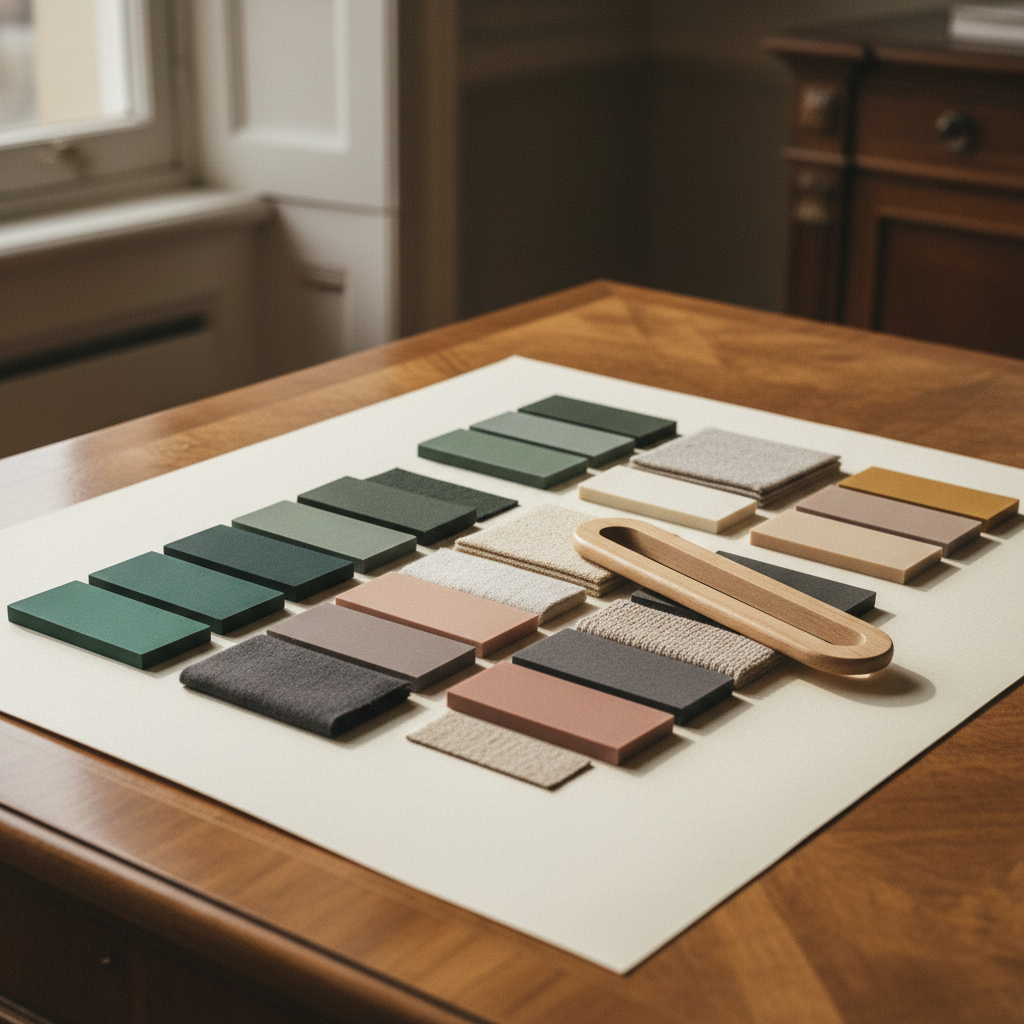
Start with your colour season
A wardrobe palette only works when it sits on a clear season foundation. Tone & Fit matches one of twelve seasons from undertone, value (light vs deep), and chroma (muted vs bright)—the same three pillars used in professional seasonal systems, delivered from a selfie or upload.
If you already know your season (for example Soft Summer, True Spring, Deep Autumn, or Cool Winter), keep that label handy. If you are still deciding, run a free scan first, then return to this planner with a named season—not a vague “I look good in blue.”
Examples only — Family swatches below are public examples for orientation
Spring Examples
Summer Examples
Autumn Examples
Winter Examples
How to build a wardrobe palette from your colour season
Do not rebuild your entire closet in a weekend. Build a small working palette—about eight to twelve wearable colours—that covers most weeks of outfits.
Name the season
Write your twelve-season result at the top of a note (example format: “True Autumn” or “Light Summer”).
Pull the season map
Open your Tone & Fit palette or family page and scan neutrals first, then mid-tones, then brights.
Pick three neutrals
Choose easy anchors you can wear as base layers: a light neutral, a mid neutral, and a deep neutral inside your season.
Pick 3-5 signatures
These are the colours that feel most “you” within the season—often the power or hero shades in your profile.
Pick two accents
Accents are smaller doses: a scarf, lip, bag, or jewellery metal flash. They add energy without forcing.
Write a one-line rule
Example: “Soft Summer: mist gray + cocoa + soft white neutrals; slate and dusty rose signatures; one mint accent.”
Callout: A working palette is a decision filter, not a prison. If a garment sits just outside the list but still matches undertone, value, and chroma, it can earn a trial week—then keep or release it based on how it photographs and feels in daylight.
Balance neutrals, signature shades, and accents
Wardrobe colours by season become wearable when each colour has a job. Use three roles so shopping and outfit math stay simple.
Neutrals (foundation)
Role: trousers, outerwear, bags, shoes
Goal: Quiet harmony near the face and in large surface area.
Tip: Match depth to your value—light seasons prefer softer deeps; deep seasons carry richer anchors.
Signature shades (identity)
Role: tops, dresses, blazers
Goal: The colours people associate with you.
Tip: Repeat signatures across fabrics so outfits mix without looking costumed.
Accents (spark)
Role: scarves, nails, small jewellery
Goal: Controlled contrast.
Tip: One accent per outfit is enough; two accents work when both share temperature.
Mini formula block — signature accent and neutral colours
Everyday formula
60% neutral · 30% signature · 10% accent
Meeting formula
Deep neutral base · signature top · metal accent
Weekend formula
Light neutral · two signatures · accessory accent
This is your colour season wardrobe planner in miniature—roles first, shopping second.
Personal colour outfit combinations by occasion
Translate the palette into outfits you can actually wear. Keep combinations short: base + main + optional accent. Examples below are patterns, swap in your season’s hex family.
Work / desk
Pattern: Mid neutral trouser + signature blouse + deep neutral layer.
Accent: Slim scarf, watch strap, or lipstick.
Why: Large surfaces stay calm; colour concentrates near the face.
Client meeting
Pattern: Deep neutral suit/separates + single signature shirt.
Accent: Recommended jewellery metal (gold, silver, or rose gold).
Why: Contrast reads intentional without visual noise on camera.
Casual weekend
Pattern: Light neutral denim/chinos + signature tee/overshirt.
Accent: Optional accent sneakers or cap.
Why: Relaxed pieces still share temperature and chroma.
Evening / dinner
Pattern: Deepest neutral base + clear signature (satin/structured).
Accent: Metal + one lip or nail accent.
Why: Evening light favors cleaner value contrast inside your season.
Active / errands
Pattern: Neutral outer layer + signature athletic top.
Accent: Accent detail (zip, logo, socks).
Why: Performance wear still benefits from undertone-aligned bases.
Season bridge look
Pattern: Keep neutrals stable; rotate only signature/accent.
Accent: Weather-appropriate accessories.
Why: Palette travels across spring outerwear and winter knits.
For menswear-specific suit, shirt, tie, denim, and outerwear paths, see dedicated guides.
Optional makeup, hair, and jewellery accents
Clothing carries most of the palette. Beauty and metal choices are optional amplifiers—use them to support the mirror and closet harmony.
Makeup
Stay inside season chroma: softer seasons prefer muted lips; brighter seasons take cleaner pigment. Use one signature lip and one neutral lip for fast decisions. Tone & Fit analysis profiles can include makeup direction.
Hair
Aim for harmony with value and undertone. Highlights that echo your signature family photograph more consistently. Premium tools such as AI Hair Studio explore style × colour options—treat them as inspiration.
Jewellery metals
Many season results point toward gold, silver, or rose gold near the face. Lead with the recommended metal in earrings and necklaces; keep mixed stacks farther from the face if you prefer variety.
Beauty accents should support the wardrobe palette, not replace it. If time is limited, lock clothing neutrals and signatures first.
Audit your current wardrobe with the palette
Before you buy, sort what you already own. A calm audit prevents duplicate shopping and surfaces gaps your working palette still needs.
An audit is inventory, not a verdict on taste, body, age, or identity. Clothes can be loved and still sit outside the current working palette.
Colour palette shopping checklist
Shop the gaps, not the whole rainbow. Bring your one-line palette rule and this checklist.
Neutrals to fill
Signatures to fill
Accents to fill
Try-on filters
A short colour palette shopping checklist beats a cart full of almost-rights.
Seven-day palette challenge
Practice locks the palette faster than theory. Wear only from your working list for one week.
Day 1
Neutral baseline
All-neutral outfit from your three anchors. Note face brightness.
Day 2
One signature
Neutrals plus a single signature top. Save the effortless combo.
Day 3
Accent only
Keep yesterday’s base; add one accent accessory.
Day 4
Work formula
Apply the 60/30/10 split to a desk or meeting day.
Day 5
Weekend formula
Lighter neutral + two related signatures.
Day 6
Beauty optional
Repeat a favourite clothing combo; add lip or metal.
Day 7
Edit
Promote Trial pieces; write the final 8-12 list.
Proof—not vibes—of which colours earn repeat wears.
FAQ
Stop guessing your next cart.
Start from your season.
Get a twelve-season result, read your undertone, value, and chroma cues, then come back to this studio with a named palette you can shop and wear.
Explore guides on Tone & Fit