The Best Lipstick Shades for Cool Undertones at a Glance
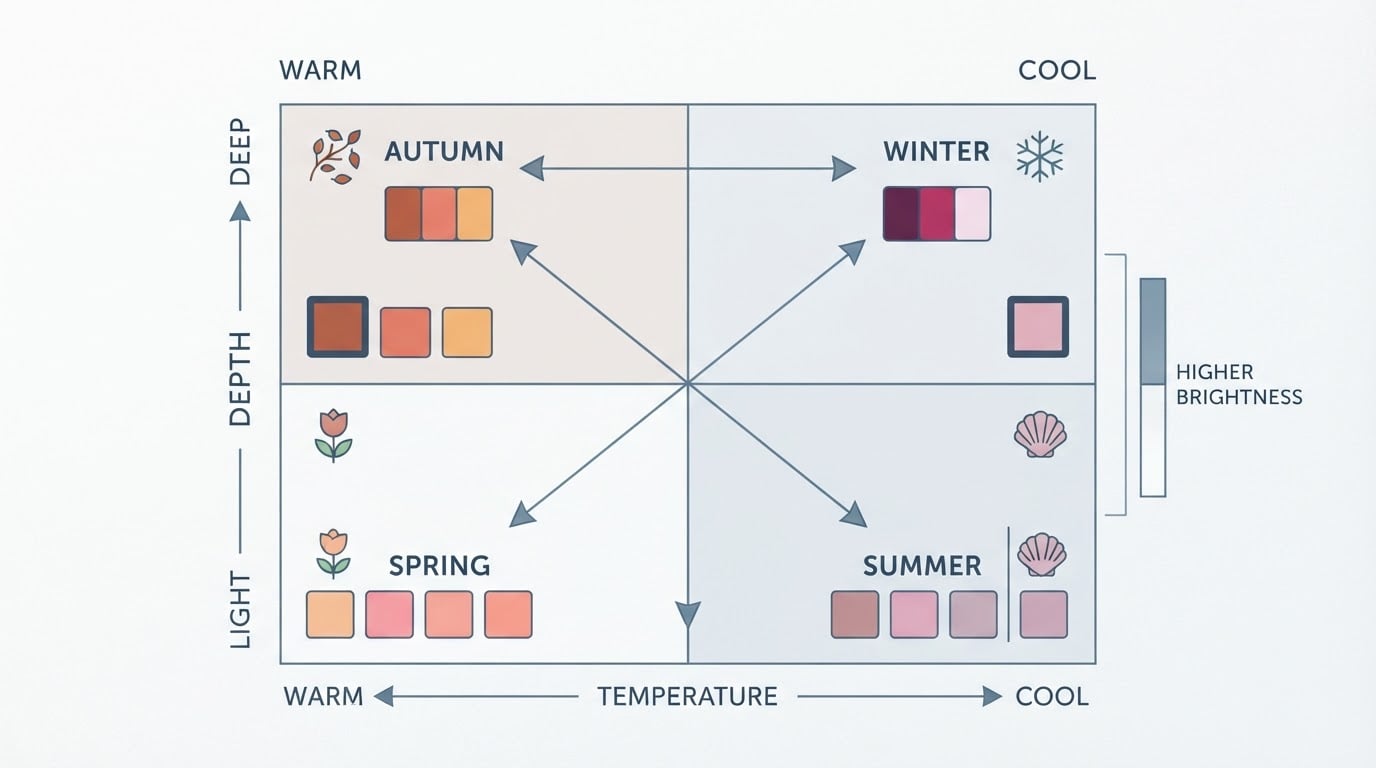
Cool undertones show up as pink, red, or blue rather than the golden, peach, or olive warmth of warm undertones. Lipsticks that share that cool base sit in harmony with your skin; lipsticks built on orange or brown warmth compete with it. In practice, four families do most of the work for cool skin: blue-based reds, berries, cool pinks, and plums. The rest of this guide is about choosing the right depth inside those families, testing a shade before you commit, and knowing what to skip.
The Four Families That Do the Work
Blue-based reds
A blue-based red reads as cherry, raspberry, or true crimson — the color of a ripe cherry rather than a tomato. On cool skin it brightens the face instead of muddying it, and it is usually the most reliable single red for a cool undertone. If the bullet looks slightly orange or brick before you apply it, that is your cue to keep looking.
Berries
Blackberry, mulberry, boysenberry, and deep raspberry sit between red and purple, with a cool, slightly inky depth. They tend to flatter cool skin in evening light and photograph well, which is why they appear so often in event makeup. A berry that leans brown is doing warm work; a berry that leans violet is the one you want.
Cool pinks
Fuchsia, magenta, cool rose, and rosy mauve cover the pink end of the cool spectrum. The trick with pink is saturation: a clear fuchsia flatters bright, high-contrast seasons, while a dusty rose or a sheer cool pink suits softer, lower-contrast ones. Peachy and coral pinks belong to warm undertones and often turn orange on cool skin.
Plums, mauves, and wines
Plum, orchid, wine, and cool mauve are the deepest of the four families. For a high-contrast cool season, a plum can read almost like a neutral, especially in a matte or satin finish. For softer cool seasons, a muted mauve or a sheer plum is easier to wear than a full-strength purple.
How to Check Your Undertone in Two Minutes
You do not need a formal analysis for a first read. Try three quick checks in daylight, with no makeup on:
- Veins. Look at the veins on your inner wrist. Blue or purple veins suggest a cool cast; green veins suggest warm; a mix of blue and green is common and points to a neutral reading.
- Jewelry. Compare silver and gold against your skin in daylight. If silver makes your skin look clearer and gold makes it look slightly dull, you are probably cool.
- White versus cream. Hold a pure white cloth and an ivory cloth near your face. If pure white flatters you and cream looks slightly yellow against you, that is another cool signal.
These are heuristics, not verdicts. Lighting, self-tan, hair color, and post-workout redness can all throw them off, which is why the test below uses a lipstick swatch as the final check.
Your Cool Sub-Season Changes the Depth, Not the Family
Season systems differ from practitioner to practitioner, but most divide cool undertones into a few depths. If you already know your sub-season, use the table below as a starting frame rather than a rule.
Sub-season | Depth and intensity | Lipstick starting points |
|---|---|---|
Cool (true) winter | Deep, saturated, high contrast | Blue-red, blackberry, fuchsia |
Deep winter | Dark and rich | Burgundy, plum, deep cherry |
Bright winter | Bright and clear | Hot pink, magenta, clear berry |
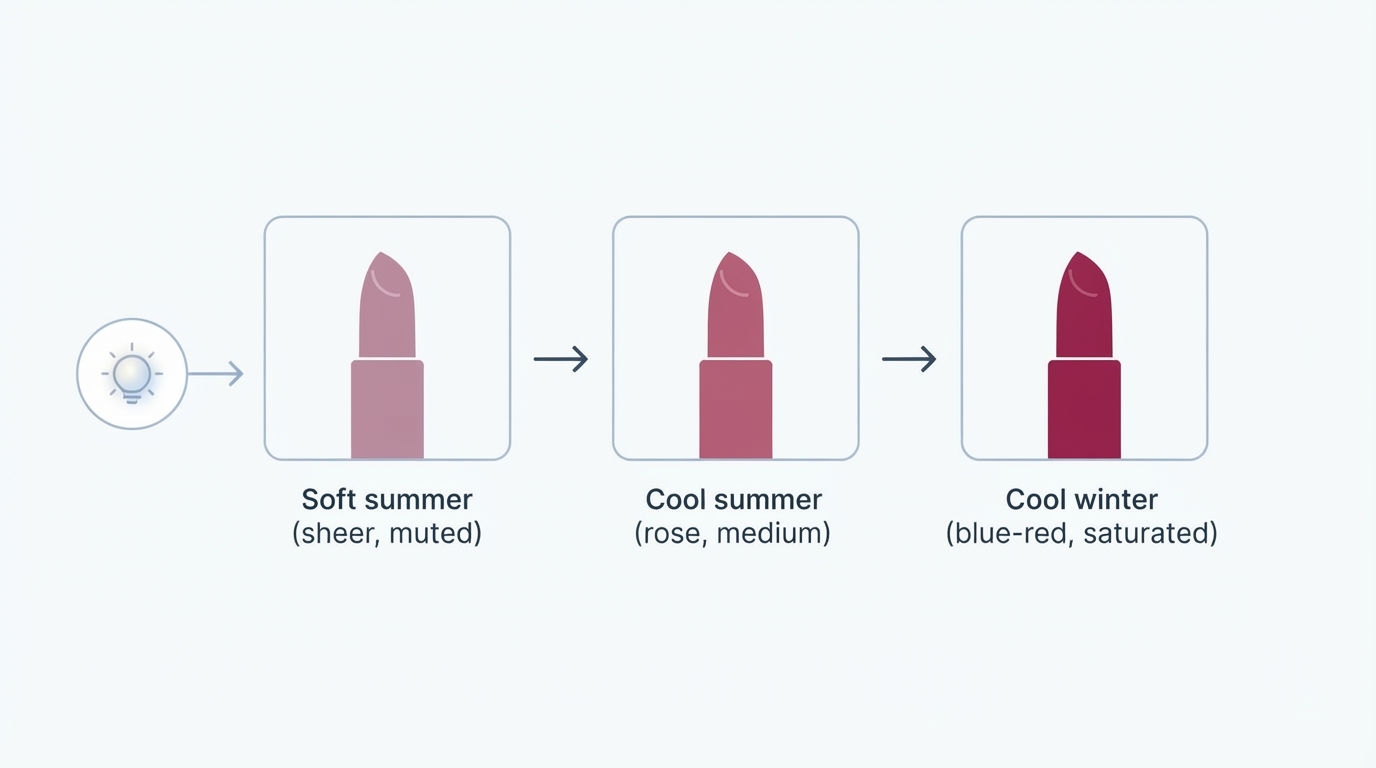
Cool (true) summer | Medium, soft, lower contrast | Rose, raspberry, sheer berry |
Light summer | Light and delicate | Cool rose, petal pink, soft berry |
Soft summer | Muted, in between | Dusty rose, muted plum, soft berry |
The pattern to notice: the family stays cool while the saturation and depth move. A soft summer and a cool winter can both wear berry — the summer wears it sheer and muted, the winter wears it dense and clear.
Test a Shade in Daylight: Four Steps
Counter lighting is the single biggest reason a lipstick that looked perfect in the store looks wrong at home. Test in this order.
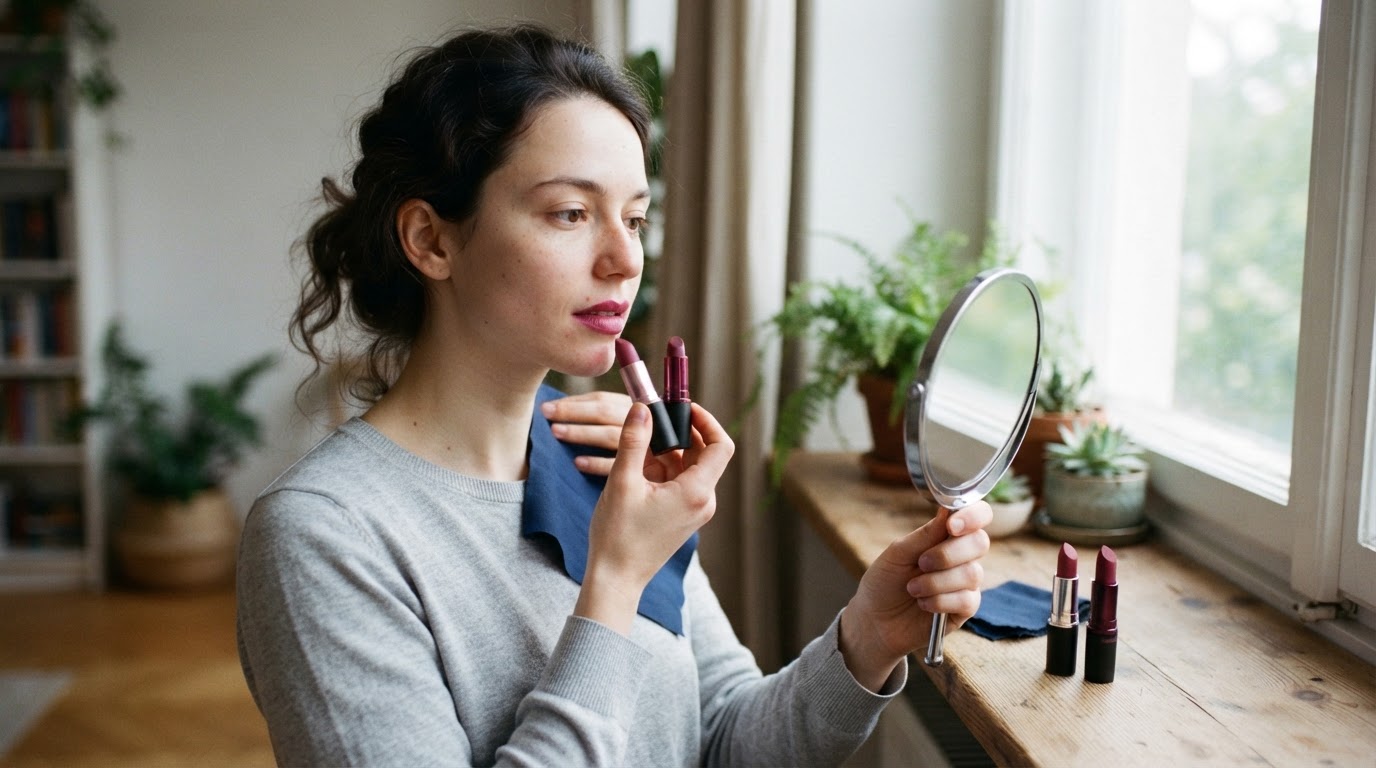
- Find indirect daylight. Stand near a window facing the sky, not in direct sun and not under a warm bulb. Mid-morning and late afternoon are usually the most neutral.
- Apply to bare lips. A lip balm base or a full face of makeup changes how the shade reads. Swipe a single layer, wait a minute, and let the finish settle.
- Compare, do not decide. Wear one candidate for a few hours, then try the other on another day. A shade that works at 9 a.m. should still work at 4 p.m.; if it turns orange or gray by the afternoon, the base is fighting you.
- Check the whole face, not just the mouth. Step back from the mirror. If your skin looks even, your eyes look awake, and your teeth look white, the shade is working. If your skin looks sallow or shadowed, the shade is pulling warm.
Phone cameras are useful for comparison photos, but auto white balance can shift a lipstick color. Take the photo in daylight, with the same background and the same time of day, and use it as a side-by-side record rather than a verdict.
What to Skip, and Why
Warm-base shades are the usual culprits when a lipstick looks wrong on cool skin. Watch for:
- orange-reds, brick reds, and terracotta
- warm coral and peach
- golden, caramel, or peachy nudes
- frosted or gold-flecked finishes
None of these are bad lipsticks; they simply carry warmth that a cool undertone has to fight. If you love the look of one, a sheer layer, a cooler liner underneath, or a gloss over a blue-based base can soften the clash. If you want a nude, look for a cool rose-nude or a mauve-nude rather than a beige one.
A Purchase Checklist for Cool-Tone Lipstick
- Pick the family first, then the depth: blue-based red, berry, cool pink, or plum.
- Swatch on your lips, never just your hand; lip pigment changes a shade.
- Test in daylight and wear it for a few hours before buying a full size.
- Buy a mini or ask for a sample when you are between two shades.
- Match the finish to the occasion: a satin or matte berry for evening, a sheer cool pink for day.
- Keep one blue-red, one berry, and one cool nude as the base of a capsule lip wardrobe.
- Photograph your best shade in daylight so future purchases have a benchmark.
Where Tone & Fit Fits In
This guide is published by the team behind Tone & Fit, so weigh the app mention with that in mind.
If you would rather start from a measured reference than a guess, Tone & Fit's 12-season palette library publishes 72 hex-coded swatches across its season pages, which makes it easy to check whether a shade you are considering sits in a cool family. The iPhone app reads your undertone, value, and chroma from one selfie and returns one of 12 color seasons, with a personal palette of curated colors and explicit power-shade and avoid lists. A free browser analyzer covers the same season question for anyone who does not want to install anything yet.
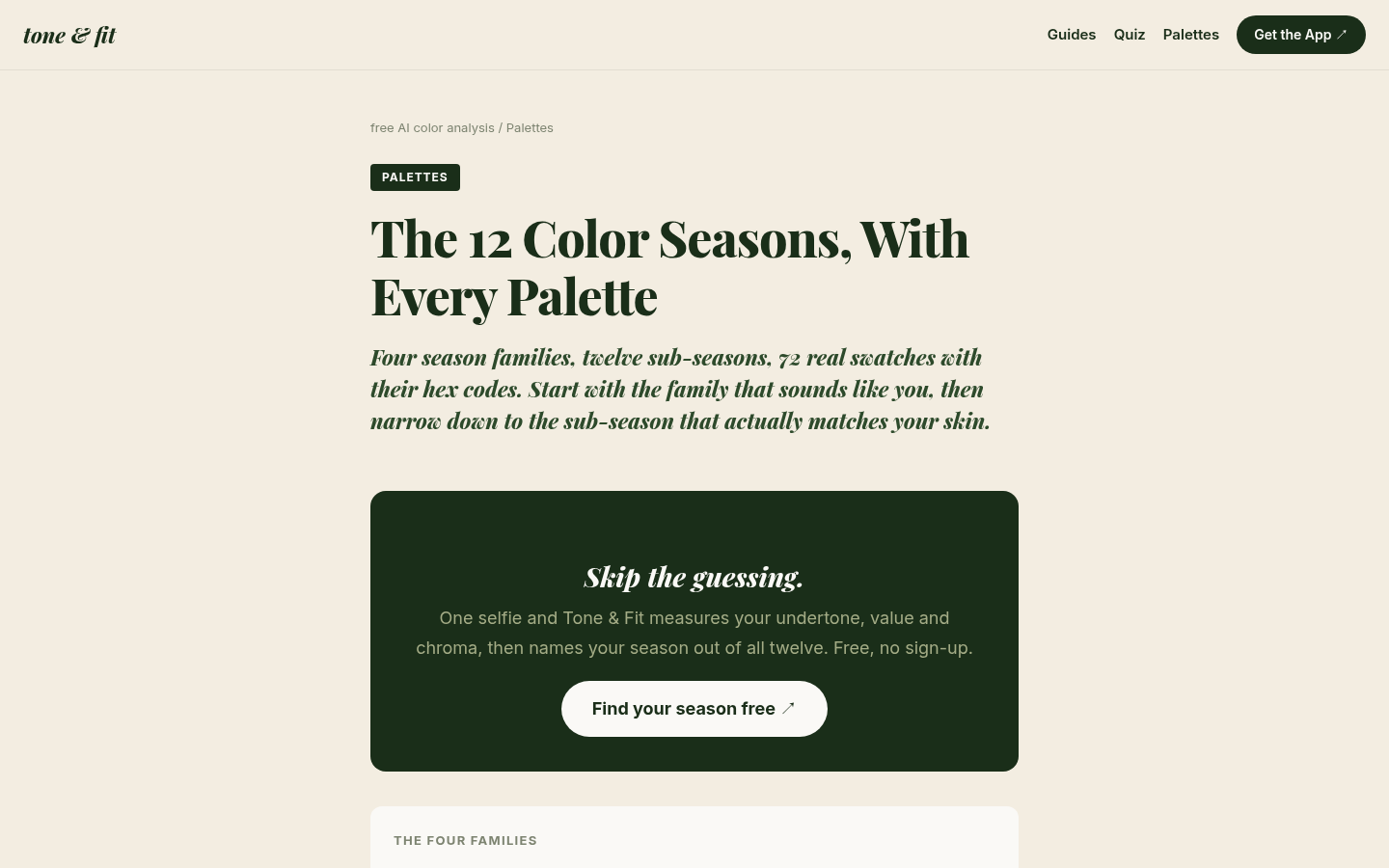
Desktop first-screen of the palettes index page showing season families (Spring, Summer, Autumn, Winter) with hex-coded swatches and sub-season links
It is one route rather than the only one. In-person draping consultation is the traditional benchmark: a trained analyst holds fabric swatches against your face in daylight and explains the result, though sessions typically cost several hundred dollars and estimates can vary between analysts. Quiz-style season tests are faster and free, but they classify you from your own answers rather than a measured reading, so treat the result as a hint rather than a verdict. Whichever route you take, test the final lipstick on your lips in daylight before you buy.
FAQ
What is the best lipstick shade for cool undertones?
There is no single best shade, but the most reliable starting point is a blue-based red, which flatters almost every cool depth. Berries, cool pinks, and plums cover the rest of the spectrum.
Are blue-based reds good for cool undertones?
Yes. A red with a blue or violet base — cherry, raspberry, true crimson — is one of the most dependable choices for cool skin. Orange-based reds pull too warm and can make cool skin look sallow.
Can cool undertones wear nude lipstick?
Yes, with a cooler definition of nude. Look for rose-nude, mauve-nude, or cool pink-beige shades. A warm beige or caramel nude is usually the one that makes cool skin look washed out.
Do berries and plums work in summer?
Yes. Swap the finish rather than the family: a sheer berry or a muted mauve reads lighter in summer, while a dense plum or burgundy suits winter. The cool base is the constant.