If your color analysis returned True Winter, your palette is cool, clear and high-contrast, and the jewelry question usually comes down to gold versus silver. Most guides point True Winter toward silver, white gold and platinum-toned pieces, but gold is not banned: the real decision is about pieces, placement and finish. This guide compares the metals, gives you a natural-light test using jewelry you already own, and explains when preference, dress code or sentiment should win.
The Short Answer: Cool-Toned Metals Fit True Winter, but Gold Is Not Banned
True Winter sits at the cool, clear, high-contrast end of seasonal color analysis, and most guides recommend silver, white gold, platinum-toned metal and polished steel for that result; one True Winter guide even notes that silver appears on the season's best-colors list as a color in its own right. The same guides rarely call gold an automatic no: the gold question answered for Winters comes back "yes, but with consideration and creativity." In short, cool metals are the reliable default, yellow gold is a judgment call about size, finish and placement, and rose gold is the most disputed option of the three.
What a True Winter Result Suggests About Temperature, Clarity and Contrast
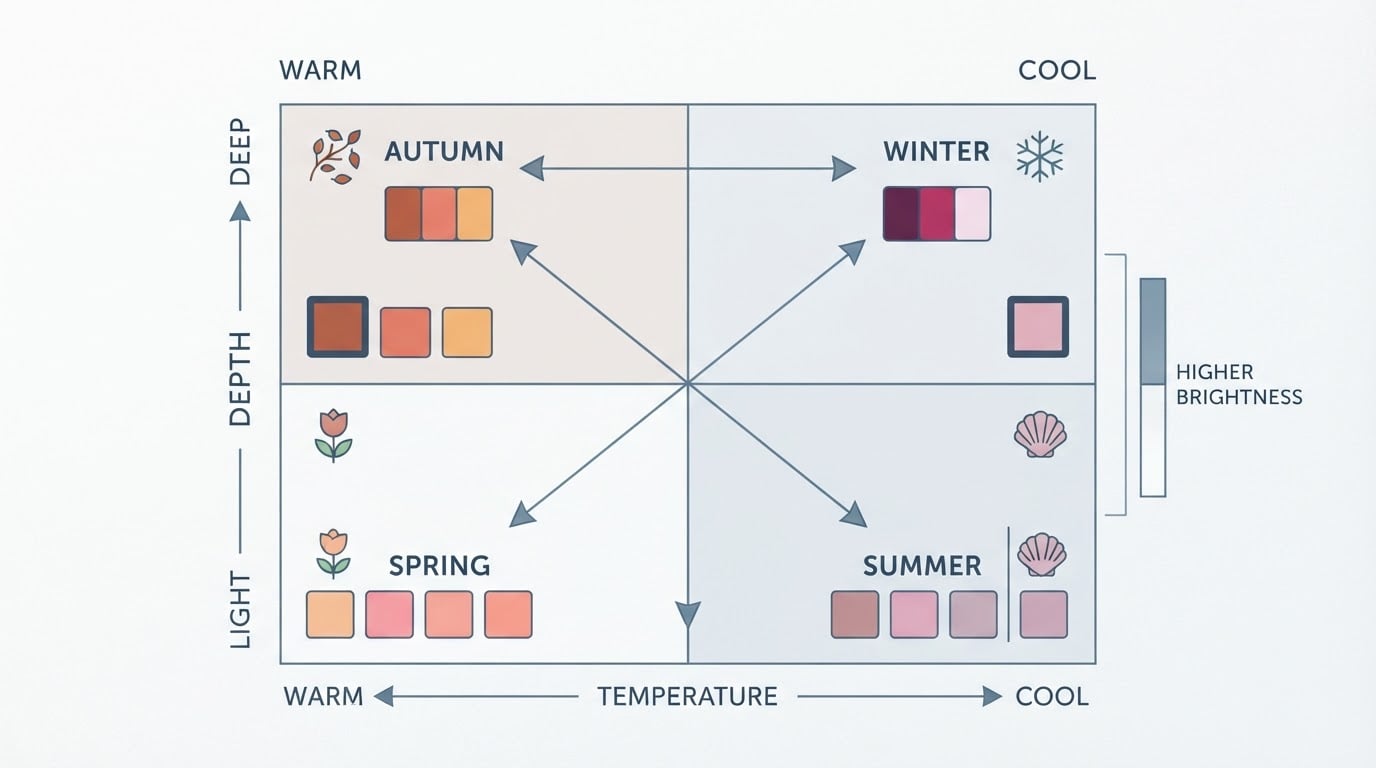
Winter palettes are cool, clear and bold: True Winter coloring usually reads as high-contrast, with dark hair, clear eyes and a bright or deep complexion that can carry icy whites, true black and saturated jewel tones. Because the skin already reads cool and crisp, a warm metal next to the face can look like a color clash, while a cool metal extends the palette instead. Kigo Color & Style's metal guide recommends silver, palladium, white gold, platinum and stainless steel for True Winter, and notes that white gold turns a soft yellow over time until rhodium plating restores its cool white brilliance.
Two caveats keep the guidance honest. Metal preference is strongest for the four "true" seasons; neutral-leaning seasons fall between the extremes, which is why holding gold next to silver is a weak way to self-diagnose a season. And the Winter family itself varies: in the same 12-season system, Bright Winter and Deep Winter can wear lower-karat yellow-gold tones that most True Winter guidance would flag. Treat any metal rule as a framework, not a fixed law.
Silver, Sterling Silver, White Gold, Platinum-Toned Metal and Polished Steel: How Their Visual Qualities Differ
Sterling silver is the everyday cool staple: bright, slightly grey-white, and easy to polish back to a high shine. It can tarnish with daily wear, so most pieces benefit from occasional gentle cleaning. White gold starts bright and white thanks to rhodium plating, and it can take on a soft yellow cast over time until it is plated again. Platinum and platinum-toned metal reads bright and cool without needing a color correction, which is why it appears so often alongside silver in True Winter guidance. Polished steel and stainless steel offer a cooler, harder grey tone with everyday durability, a common choice for watch cases and chain bracelets. For a darker direction within the cool family, the same guides list gunmetal, chrome, titanium, pewter and antique silver.
Can True Winter Wear Yellow Gold? Yes, With the Right Pieces
Yellow gold is the warmest of the common metals, and large solid pieces are the version that most guides single out for a fully cool season like True Winter. That does not make it forbidden: the practical guidance is to balance it, using smaller pieces, cooler-leaning designs and mixed-metal jewelry so the warmth never overpowers a cool palette. White gold and platinum-toned pieces deliver the same precious-metal feel in a cool shade. Rose gold splits the guides: a cooler, pink-leaning rose gold can work for some Winters, while others call it the weakest metal in the Winter family, so it is the clearest case for trying before buying. Even within the family, guides treat lower-karat yellow gold as mildly warm rather than intensely warm, and some Winter sub-seasons include yellow-gold tones in their own metal guidance.
How Finish Changes the Effect: Polished, Matte, Antiqued and Brushed
Finish controls how much light a piece throws back: polished mirror is the brightest version of any metal, satin softens the glow, brushed adds a fine linear texture, matte diffuses light almost completely, and antiqued pieces carry a darkened patina. For True Winter, high shine is commonly an asset rather than a risk: the True Winter accessories guide at ColorSeasonAI argues that moving from brushed silver to mirror-polished platinum can change the effect more than the gold-versus-silver choice itself.
Finish also shifts how warm or cool a metal looks: tarnished or antique surfaces can pick up a yellowish cast, which is why regular polishing keeps silver bright and rhodium plating keeps white gold white. Matte and brushed are largely a taste question: some guides prefer high-shine or satin surfaces for True Winter and find matte textures busy, while others happily recommend satin or hammered textures for everyday wear, so try the same design in two finishes before you decide.
Coordinating Metals With True Winter Wardrobe Colors and Outfit Contrast
True Winter's familiar colors — true black, white, navy, cobalt, emerald and icy brights — sit easily with cool metals: silver and white gold look crisp against black and white, and a high-contrast outfit can carry a bolder metal than a soft, low-contrast one. Metals also hide in outfit hardware: bags, belts, zippers and clasps with warm brass or gold hardware can quietly fight a cool palette, so when a black or navy bag looks right, check its metal details too and look for silver, steel or gunmetal hardware instead.
Choosing Gemstones and Colored Details Without Rigid Rules
Gemstones follow the same temperature logic rather than a fixed list. Cool, saturated stones — sapphire, emerald, amethyst, diamond and white sapphire — are the ones most True Winter guides set in silver or platinum settings, while warm stones such as amber, citrine, coral and turquoise lean toward Autumn palettes. Pearls are the subtle case: cooler silver-white pearls generally harmonize, while golden or cream pearls carry the warmth most Winter guidance avoids. Treat these as starting points, not rules; a colored stone you love can still be the deliberate exception discussed at the end of this guide.
A Natural-Light Comparison Method Using Jewelry You Already Own
You do not need new pieces to settle a gold-versus-silver question; you need a window, a mirror and about ten minutes, repeated on a second day in the same spot:
- Gather four to six pieces spanning the options — sterling silver, white gold, yellow gold, rose gold and mixed-metal designs — and clean them so tarnish does not skew the read.
- Set up beside a bright window on an overcast or indirect-light day, and switch off warm lamps so the light stays neutral.
- Wear a plain top in a True Winter color such as black, white or navy so the outfit does not bias your eye.
- Hold each piece just below your jaw, one at a time, and look in the mirror rather than at a screen.
- Watch for two effects: whether the metal blends with your skin or pulls against it, and whether it brightens or flattens your face.
- Move the same piece to your wrist and check the impression again, away from the face.
- Photograph every piece in the same spot, then repeat the test on a second day and compare notes.

One caution: this test compares pieces within a result you already have; it is a weak tool for diagnosing a season, because neutral-leaning seasons genuinely sit between the extremes. If the test is inconclusive, that is information about your personal tolerance, not a failure of the method.
Earrings, Necklaces, Glasses and Watches: Near the Face vs Away From It
Distance from the face changes the stakes. Pieces closest to the face — earrings, necklaces and glasses — do most of the color work, and True Winter guidance is most confident there: polished cool metal at the jawline, cool stones near the face, and glasses frames that stay cool too, with black and silver-metal frames the common recommendation and warm gold frames the usual mismatch.
Away from the face, the rules relax. A sentimental yellow-gold ring worn on the hand sits far outside the face's frame, where it reads as a small warm accent rather than a competing glow. Watches are the piece people forget: a steel, silver or gunmetal case is the recurring recommendation in True Winter accessories guidance, because the wrist keeps warm metal in view all day. When a warm piece means something to you, keep it at the periphery or stack it between cool pieces so the warm accent is diluted rather than isolated.

A Concise Shopping Checklist for Comparing New Pieces
- Let the natural-light test drive the pieces closest to your face.
- For everyday silver, choose sterling silver; for white gold, ask whether the piece is rhodium-plated and can be re-plated later.
- For yellow gold, prefer smaller or mixed-metal designs over large, solid gold statements near the face.
- Check the finish in daylight: polished and satin are the mainstream True Winter choices; evaluate matte and brushed on your own wrist and jawline.
- Pair cool stones — sapphire, emerald, amethyst, diamond — in silver or platinum-toned settings; keep warm stones for deliberate accents.
- Inspect hardware: zippers, buckles and clasps should read cool, in silver, steel or gunmetal, when the outfit matters.
- Try pieces with the outfits you actually wear: black, navy, cobalt, emerald and icy whites.
- Keep the piece's metal description, such as sterling, plated or karat, so cleaning and future care stay easy to plan.
When Preference, Dress Code or Sentiment Matters More Than the Palette
Color analysis is a framework, not a fixed law: systems differ from four-season to twelve-season and analyst to analyst, neutral-cool results sit between the rules, and no metal is universally flattering or forbidden. The guides themselves leave room for exceptions: engagement rings, family heirlooms and ceremonial pieces usually outrank palette guidance, and a dress code that calls for a specific metal can settle the question without any color theory.
Deliberate contrast is also a legitimate choice: an intentionally warm piece against a cool palette can read as a confident style statement rather than a mistake. The practical rule is to decide in natural light, to weigh pieces near the face most heavily, and to let the final say belong to what you actually enjoy wearing.
Disclosure: this guide is published by the team behind Tone & Fit, an AI-powered color analysis app.

Tone & Fit product interface.
Tone & Fit's color analysis also returns a jewelry-metal direction — gold, silver or rose gold — based on the undertone it measures, which makes a useful cross-check for the test above. If you have not run an analysis yet, the free Tone & Fit color analysis is an easy starting point, and the Tone & Fit app keeps your palette and metal guidance handy when you shop.