The Short Answer: Olive Undertones Do Not Require One Metal
Search for gold or silver jewelry for olive undertone skin and you will find confident answers pointing in opposite directions. Two people with olive skin can both be right, because olive is not a single undertone. It is a green-gray cast that can sit over a warm, neutral or cool base and can appear at any depth from fair to deep (ToneLala).
That means the metal question has more than one honest answer. Five factors decide it:
- Undertone temperature. Warm olive leans toward yellow gold; cool, ashy olive leans toward silver and white gold.
- How neutral your olive is. Neutral olives often find both metals work, which is a result rather than indecision.
- Finish. The same metal reads bright or muted depending on whether it is polished, satin, brushed or antiqued.
- Clothing colors. Jewelry is an accent; the dominant tone near your face changes how the metal reads.
- Contrast preference. Some readers want the metal to harmonize, others want it to stand out.
Personal preference belongs on that list too. A metal you love and wear well looks more intentional than one chosen purely from a rule.
Olive Skin Tone vs. Undertone
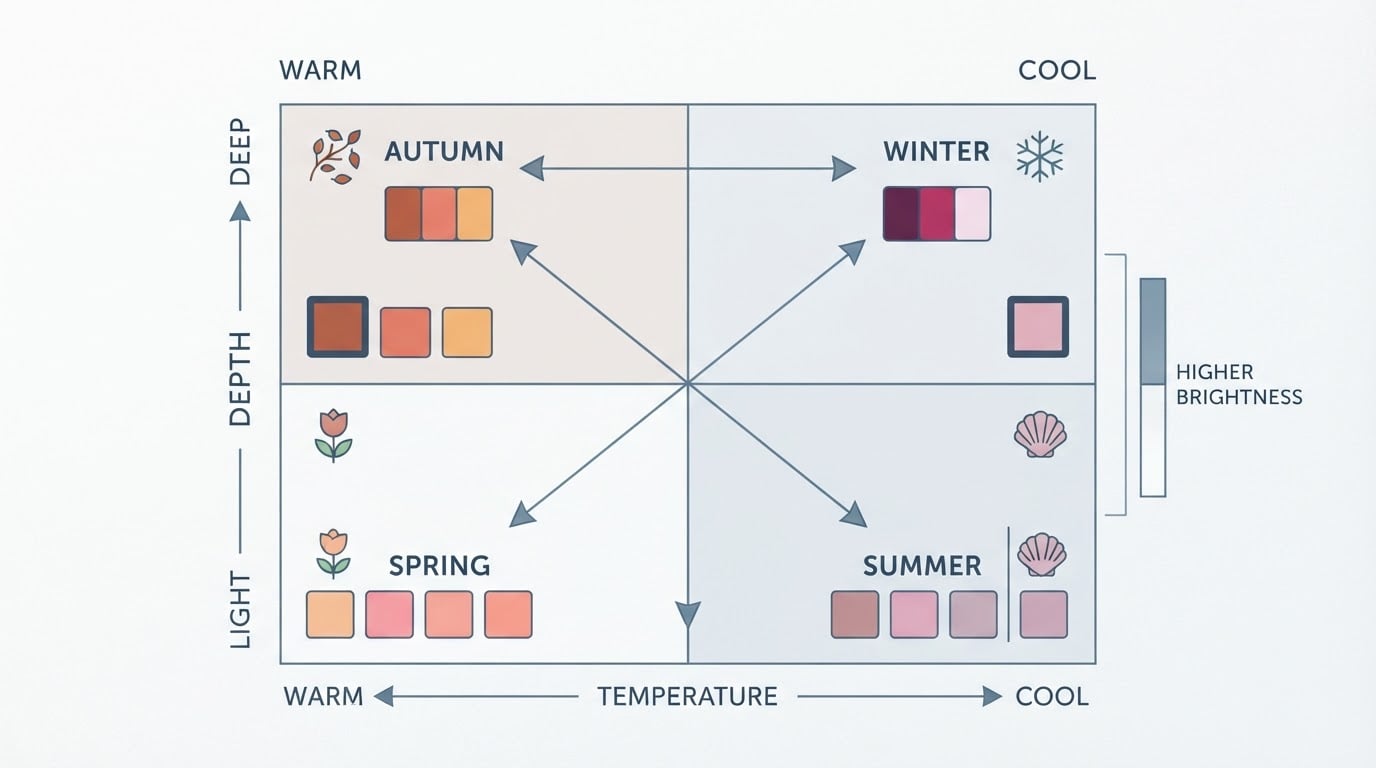
Most jewelry advice goes wrong at this step. Skin has two layers. The surface layer, sometimes called overtone, is what you see in the mirror: fair, light, medium, tan, deep, olive, reddish or peachy. It changes with sun, skincare, hormones and age. The undertone is the base underneath: warm (yellow, golden or peach hints), cool (pink, red or blue hints) or neutral, and it stays comparatively constant (ColorisLab).
Olive is often described as the surface, not the base, which is why the phrase olive skin tone tells you less than it seems to. Olive's green-gray cast comes from cooler blue-grey pigment interacting with yellow melanin, so many olive-skinned readers are actually cool-toned. The surface suggests warmth; the undertone can say something else. Do not assume an olive complexion is warm, and do not assume it is cool either. The metal test is one clue, not a verdict.
Why Olive Undertones May Lean Warm, Cool or Neutral
Color analysts commonly split olive into three leans, and each behaves differently in front of a mirror (ToneLala):
Warm olive. The cast reads green-gold. Skin tans to bronze, earthy colors look as though they were mixed for you, and gold tends to make the face look awake while silver can look slightly flat.
Neutral olive. The cast reads green-gray. Gold and silver both look acceptable, and the weak spot is pale pastels, because a color with no depth of its own lets the green cast do all the talking. Think muted, mid-to-deep colors and choose on finish and outfit.
Cool olive. The cast reads green-ash. Skin rarely turns golden in the sun, warm colors can look sallow, and silver, white gold and crisp white tend to be the friendlier choices. The three leans point to three starting points: gold for warm olive, either metal for neutral olive, and silver or white gold for cool olive.
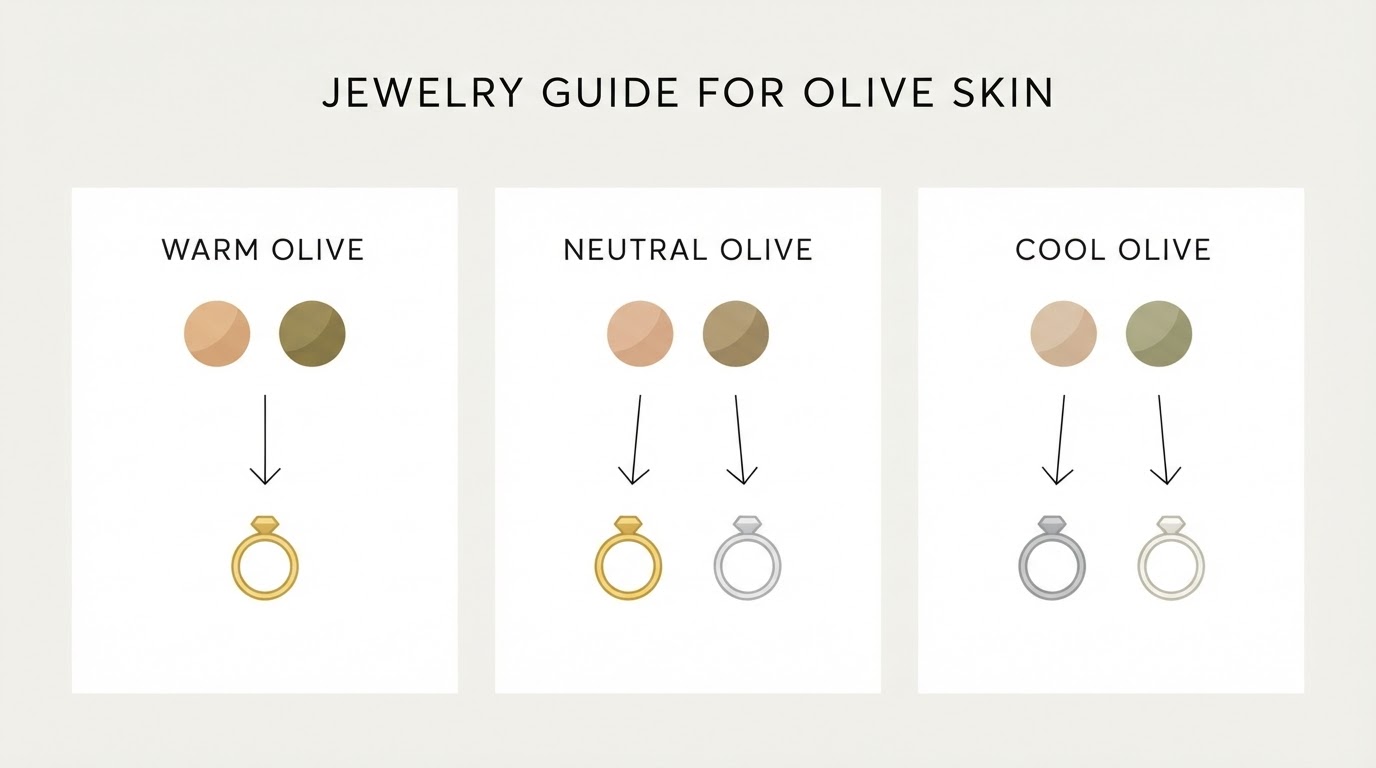
The lean points you in a direction; the specific piece still has to pass the daylight test below.
Gold Compared with Silver
On the simplest reading, yellow gold carries warmth and silver carries coolness. The useful comparison is not which one is better but what each does next to your face.
Metal | Temperature read | Where it tends to work |
|---|---|---|
Yellow gold | Warmest of the common metals | Warm or warm-leaning olive; earthy wardrobes |
Silver | Cool and bright | Cool or ashy olive; cool, high-contrast wardrobes |
White gold | Cool, with a softer white face | Cool olive that wants a less mirror-like cool metal |
Rose gold | Warm with a blush note | Neutral or warm olive that wants softer warmth |
Bronze | Earthy and muted | Warm or neutral olive, especially in matte finishes |
Mixed metals | Both, with a dominant note | Readers who want balance and one point of contrast |
For a quick working sense of the group: Yellow gold reads warmest and often flatters a warm olive. Silver reads cool and bright and tends to suit a cool or ashy olive. White gold offers a softer, whiter cool option near the face. Rose gold adds a warm blush that can soften a greenish cast without the full force of yellow gold. Bronze is the earthiest of the group and tends to sit best with warm or neutral olives. Mixed metals are a legitimate choice when one metal stays dominant near the face and the second appears in a lower-contrast piece.
Vein color and holding a ring near the face are worth trying, but both mostly read the surface. Analysts consider fabric draping, physical or virtual, the more reliable test because it watches how the skin reacts rather than how the veins look (ColorisLab).
Where Rose Gold, Bronze, White Gold and Mixed Metals Fit
The plain gold-versus-silver choice leaves out useful middle ground.
Rose gold on olive skin adds a warm blush that can soften a greenish cast without the full force of yellow gold, so it often works for readers who find yellow gold slightly too warm and silver slightly too cold. White gold reads cool and bright like silver but with a softer, whiter face, a good option for cool olives who want low-contrast metal. Bronze is the earthiest of the group and tends to sit best with warm or neutral olives, particularly in matte and antiqued finishes.
Mixed metals work when one metal stays dominant near the face and the second appears in a lower-contrast piece, such as a silver pendant on a thin gold chain. Choose one focal contrast and let the rest support it (Atole).
How Polished, Brushed and Antiqued Finishes Change Contrast
Two pieces can be the same color of metal and still behave differently, because finish controls how light leaves the surface (Borsheims):
- Polished is mirror-like; it creates the strongest contrast and reads dressy and modern.
- Satin diffuses light and sits between matte and polished, looking soft rather than sparkling.
- Matte absorbs light for a muted, contemporary look with no shine.
- Brushed or wire-brushed etches fine parallel lines for a semi-matte surface with a directional grain.
- Antiqued is deliberately oxidized so recessed areas darken while raised surfaces stay bright, which adds depth to engraving and texture (CaratX).
Brighter, high-shine finishes suit warmer and lighter olives, while deeper olives often look more balanced in muted, antique or brushed finishes (Atole). If silver feels harsh, try satin or brushed rather than abandoning cool metal. If gold feels heavy, try a smaller polished piece or a brushed finish.
How Clothing Colors Affect the Comparison
Jewelry does not operate alone. Cool silver tends to look cohesive with navy, charcoal, emerald and icy pastels, while olive and cocoa make silver stand out without clashing; warm, muted outfits make gold look intentional rather than accidental (Atole).
Two wardrobe tests carry over from color analysis. Cream versus white: cream tends to flatter a warm lean while crisp white tends to flatter a cool lean. Rust versus berry: warm olives usually glow in rust, cool olives usually look better in berry, and neutral olives often look good in both. Use them as direction-finders, then confirm with the jewelry test.
A Side-by-Side Jewelry Test in Consistent Daylight
This is the controlled version of the test most people do by accident. Use it once and you will have a repeatable standard:
- Choose comparable pieces. Pick one yellow-gold and one silver piece of similar size and visual weight; a thin chain against chunky hoops compares two variables at once.
- Control the clothing variable. Wear a plain mid-tone top, or compare both metals against the same top. Remove strongly colored clothing if it might bias what you see.
- Stand in consistent indirect daylight. Near a window is ideal. Avoid warm indoor bulbs, ring lights and mixed light sources, which shift metal color.
- Hold each piece just below the jaw, one at a time, and look at the skin around it rather than at the metal alone. Which piece makes the skin look clearer and more even?
- Judge evenness, not sparkle. A bright piece can catch your eye without flattering the face. Look for shadowing, redness or a grey cast next to the metal.
- Use a mirror first. Photograph only for personal reference if you want to; cameras adjust color. If you do photograph, use the same light and position for both metals.
- Assess the complete outfit. A metal that wins near the face is not automatically the winner for a full look.
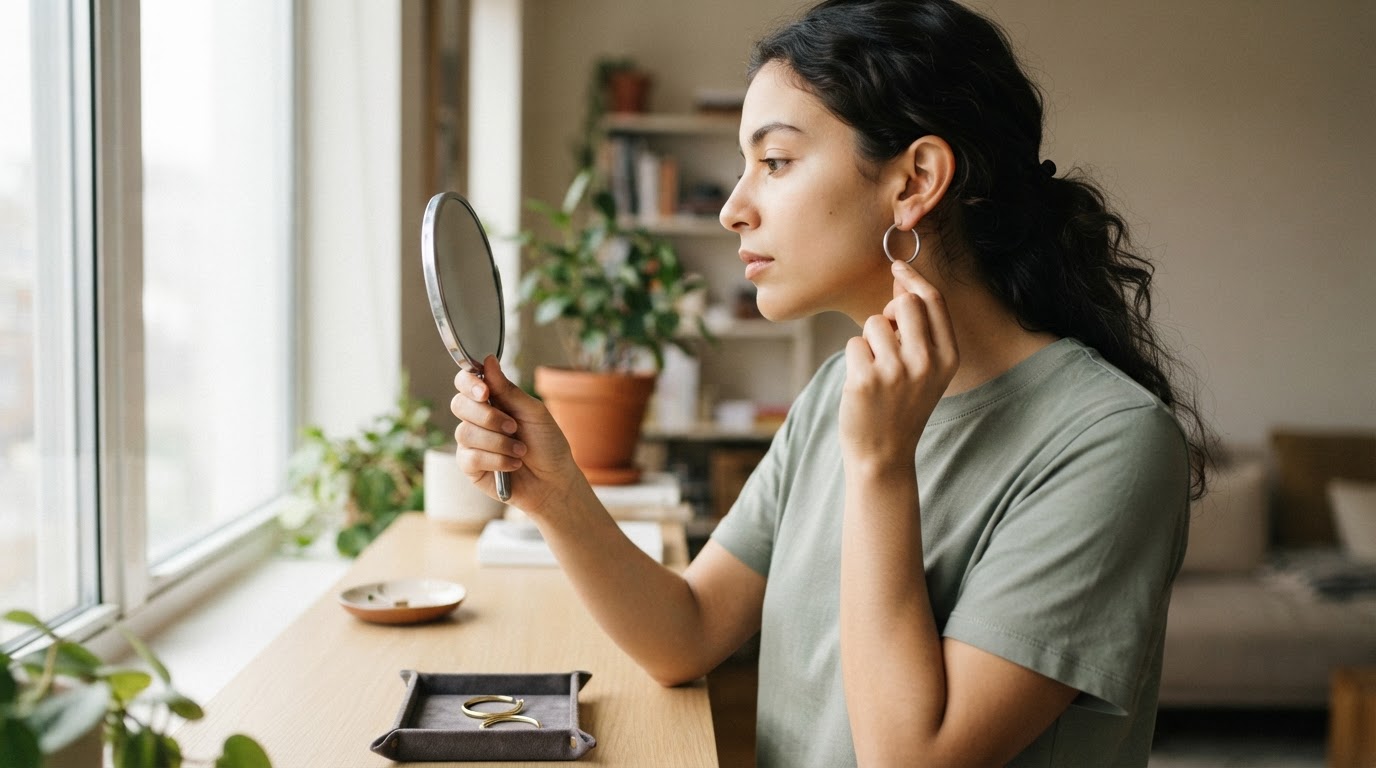
You can call the test finished when one metal repeatedly wins across two sessions and two outfits. If neither wins, treat yourself as neutral-toned and choose by finish, outfit and preference. One limit matters: a jewelry test reflects what you see and cannot decide your undertone on its own.
Examples for Different Skin Depths and Style Preferences
Olive appears at every depth, and the answer changes with it.
Fair cool olive. Polished silver or white-gold studs near the face; keep yellow gold for bracelets away from the jaw.
Medium warm olive. Yellow-gold hoops in brushed or satin finishes, with rose gold as a softer accent.
Deep neutral olive. Bronze or mixed metals, often antiqued for texture, with silver dominant near the face if the skin reads neutral-cool.
Menswear. Brushed and matte finishes read modern and low-key on chains, watches and cufflinks.
Changing hair or beard color. A large shift in tone changes the contrast beside your face, so re-run the two-metal test.
Cultural and personal style. Sentimental and heirloom pieces are legitimate; if a metal matters to you, keep it near the face and let the second metal carry the contrast elsewhere.
A Shopping Checklist for Earrings, Necklaces and Other Near-Face Pieces
- Earrings, necklaces, glasses and collars influence your face most, so start there.
- Copy both the winning color and the winning finish, not just the color.
- Test each candidate against two outfits you actually wear, in the daylight you actually live in.
- If you mix metals, keep one dominant metal near the face and one point of contrast.
- Note the result in words, such as warm brushed gold or cool polished silver.
- If both metals genuinely tie, buy the piece you like more; neutral olives have that option.
Frequently Asked Questions
Does olive skin have to wear gold?
No. Olive is a surface cast, not a guaranteed warm undertone, so a blanket gold rule is wrong for many cool and neutral olives. Warm olives often suit gold; cool olives often suit silver and white gold.
Is silver bad for olive skin?
No. Silver suits cool and ashy olives and works for neutral olives. If it looks harsh, the finish is often the issue, so try satin or brushed instead of high polish.
Does gold look good on olive skin?
Often, especially on warm or warm-leaning olives and in warmer finishes. The honest answer depends on the undertone under the cast, which is what the daylight test is for.
Can a jewelry test tell me my undertone?
Not on its own. Jewelry and vein tests tend to read the surface layer. They are useful hints; a controlled drape or a photo-based analysis reads the base more reliably.
Can I wear gold and silver together?
Yes, if it looks deliberate. Keep one metal dominant near the face, keep the second piece lower-contrast, and repeat the pair in more than one outfit before calling it your signature.
Is rose gold a good choice for olive skin?
It is often the middle path: warm enough to harmonize with a warm or neutral cast, soft enough not to overwhelm a cooler one. Test it beside your silver and yellow-gold reference pieces.
A Second Opinion Before You Buy
Disclosure: this guide is published by the team behind Tone & Fit, an AI-powered color analysis app.
Tone & Fit's free color analysis reads the undertone beneath the surface cast and returns a jewelry-metal direction — gold, silver or rose gold — alongside your palette, which can confirm what your daylight test already suggested. If you want that second opinion before your next purchase, run the free color analysis or use the app to keep the result with your shopping checklist.
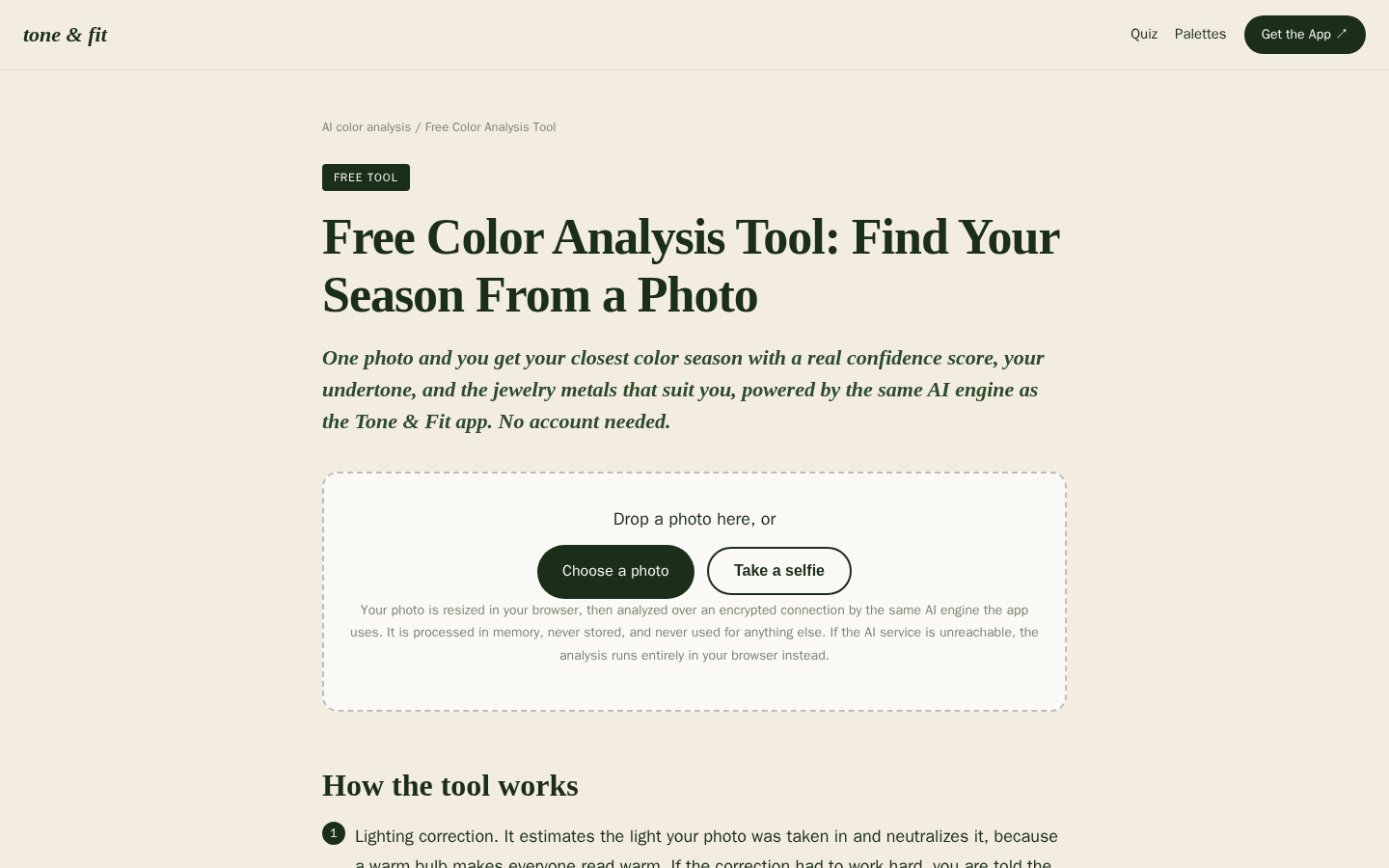
Desktop first-screen of the free web-based color analysis tool with photo upload drop zone, how-it-works steps, and privacy notes