Why Your Season Decides More Than the Trend
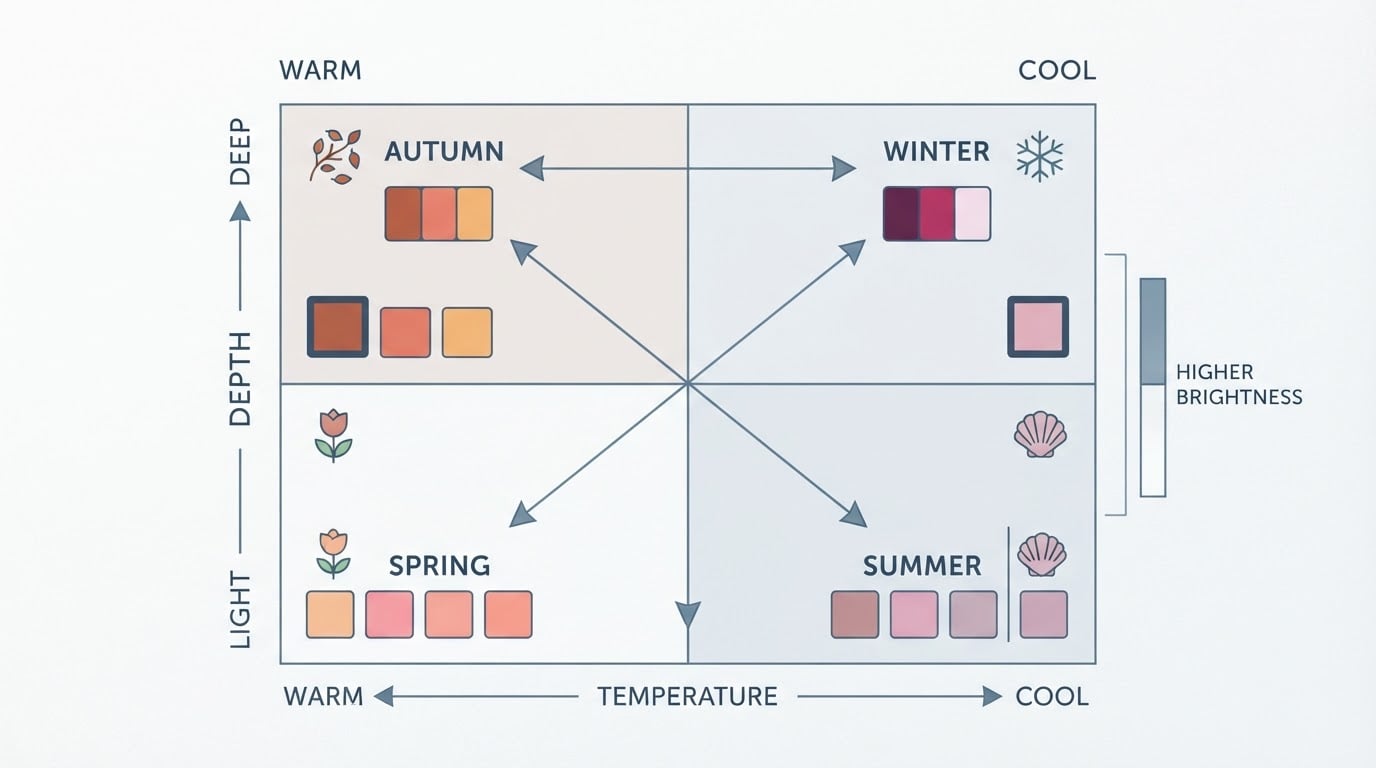
Hair color is not one universal answer. The same copper that looks luminous on one person can read harsh on another, and the difference usually comes down to how the shade interacts with your natural coloring. Professional color analysts reduce that interaction to three variables: undertone (warm versus cool), value (light versus deep), and chroma (muted versus bright). Together, they point to a color season — one of twelve sub-seasons grouped into the four families of spring, summer, autumn, and winter.
That is why “warm” and “cool” are directions, not personality labels. They describe where a shade sits relative to your skin's undertone. Match the direction and the color looks intentional. Miss it and the color tends to sit on top of you, flat or brassy, no matter how trendy the shade is.
In-person draping is the traditional way to find your season, and appointments commonly run $200–$400. Cost and variation between analysts are the two reasons many people want a faster first read before they commit to a color change — and why a seasonal framework works better as a shopping filter than a list of trending shades.
Warm vs Cool: Choose a Direction First
Direction narrows thousands of shade names into two manageable columns. These are families, not specific formulas; a competent colorist can hit any of them.
Direction | Shade families to shortlist | What usually makes it work | What to watch |
|---|---|---|---|
Warm | golden blonde, honey, copper, caramel, chestnut, warm auburn | Undertone reads golden or peachy; depth stays within a shade or two of your natural base | Very ashy tones can read gray or dusty against warm skin |
Cool | ash blonde, cool brown, espresso, burgundy, berry red | Undertone reads pink, red, or neutral-cool; shine comes from depth rather than gold | Golden or brassy tones can pull orange as the color fades |
Neutral-leaning | softer versions of either column | You can borrow from both sides as long as depth and brightness stay close to your natural level | A strongly warm base with a strongly cool top can look disconnected |
The useful part of this table is the last column. Most hair-color disappointments are not about picking the wrong family; they are about a temperature mismatch between the shade and the skin, or a shade that drifts warmer with every wash.
Contrast Level Sets How Much Change You Can Carry
Contrast is the depth difference between your hair, skin, and eyes, and it decides how much separation a color can hold.
- High contrast — dark hair and eyes against lighter skin, or the reverse. Clear, saturated shades and a distinct depth change usually look strong. Soft, all-over blends can flatten the face.
- Low contrast — features that sit close together in value. Tonal, blended color with gentle dimension usually works better than a hard block of dark or platinum. A dramatic change can overpower rather than refresh.
- Medium contrast — the widest range. Pull the direction from your undertone, then stay within a shade or two of your natural depth unless you want a deliberate statement.
Contrast also sets your maintenance reality. A large depth change shows regrowth sooner and needs more frequent salon visits. If you cannot commit to that rhythm, keep your natural depth and change the tone instead — the difference reads as intentional and grows out gracefully.
How to Narrow the Choice Before You Book
This is where a photo-based read earns its place as a first filter. Tone & Fit, an iOS app listed on the App Store as “AI Photo Skin Tone & Palette”, works from one selfie or an uploaded photo. The scan measures the same three pillars a consultant checks — undertone, value, and chroma — and returns a match from the 12-season system in about 30 seconds. It is free, needs no account, and skips the long questionnaire format; you can re-scan to see whether the verdict holds.
If you would rather not install an app first, the browser analyzer version of the same analysis returns a season reading with a confidence signal, so you can judge how firmly the result landed before you act on it.
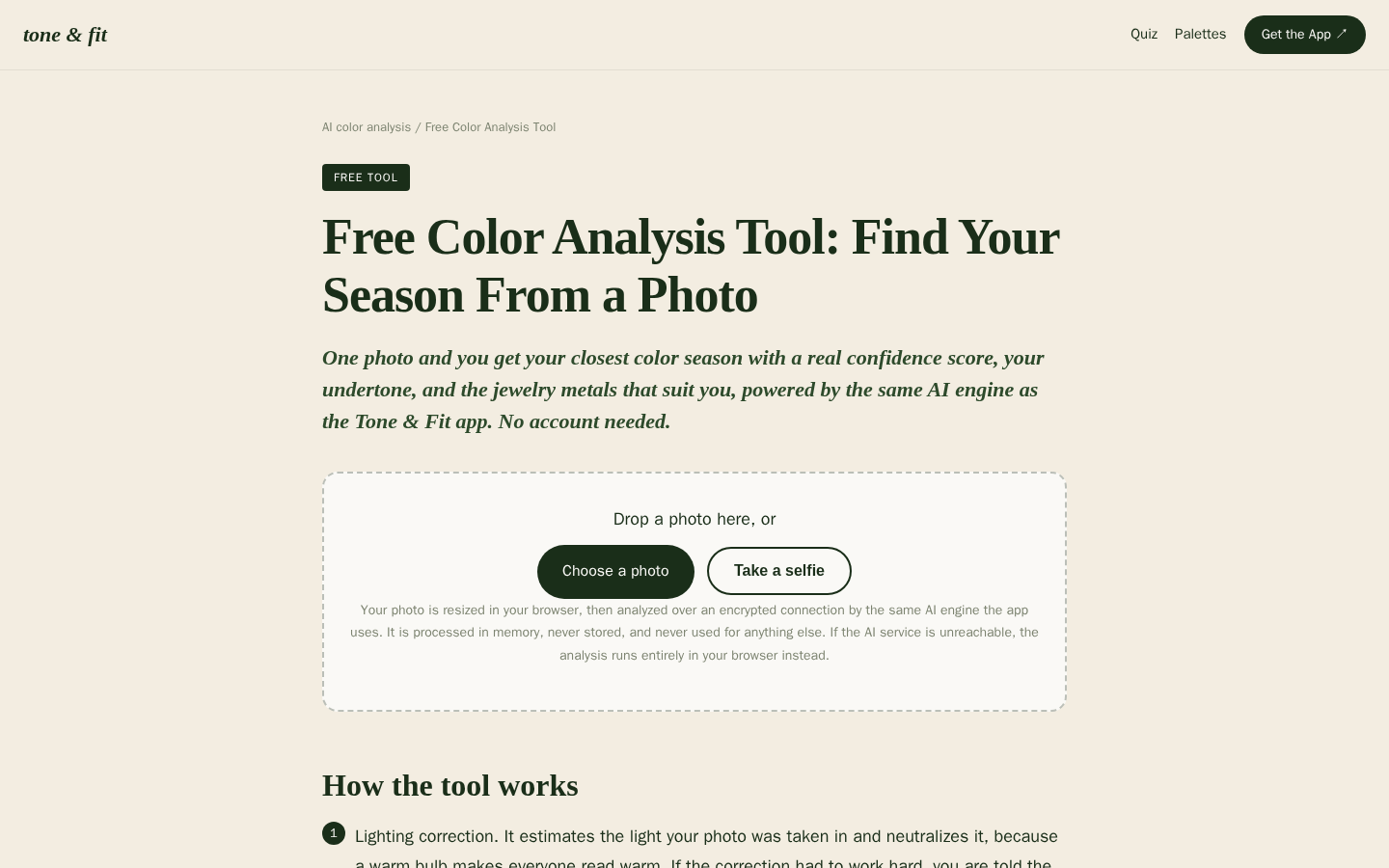
Desktop first-screen of the free web-based color analysis tool with photo upload drop zone, how-it-works steps, and privacy notes
The palette side matters just as much. Tone & Fit keeps a free 12-season palette library with 72 hex-coded swatches across the twelve sub-seasons, so you can check a specific mustard, navy, or copper against your season instead of guessing from a trend photo. Pull two or three swatches you like and hold them near your face in daylight; then bring those references to the appointment so the colorist can translate them into a shade family and formula.
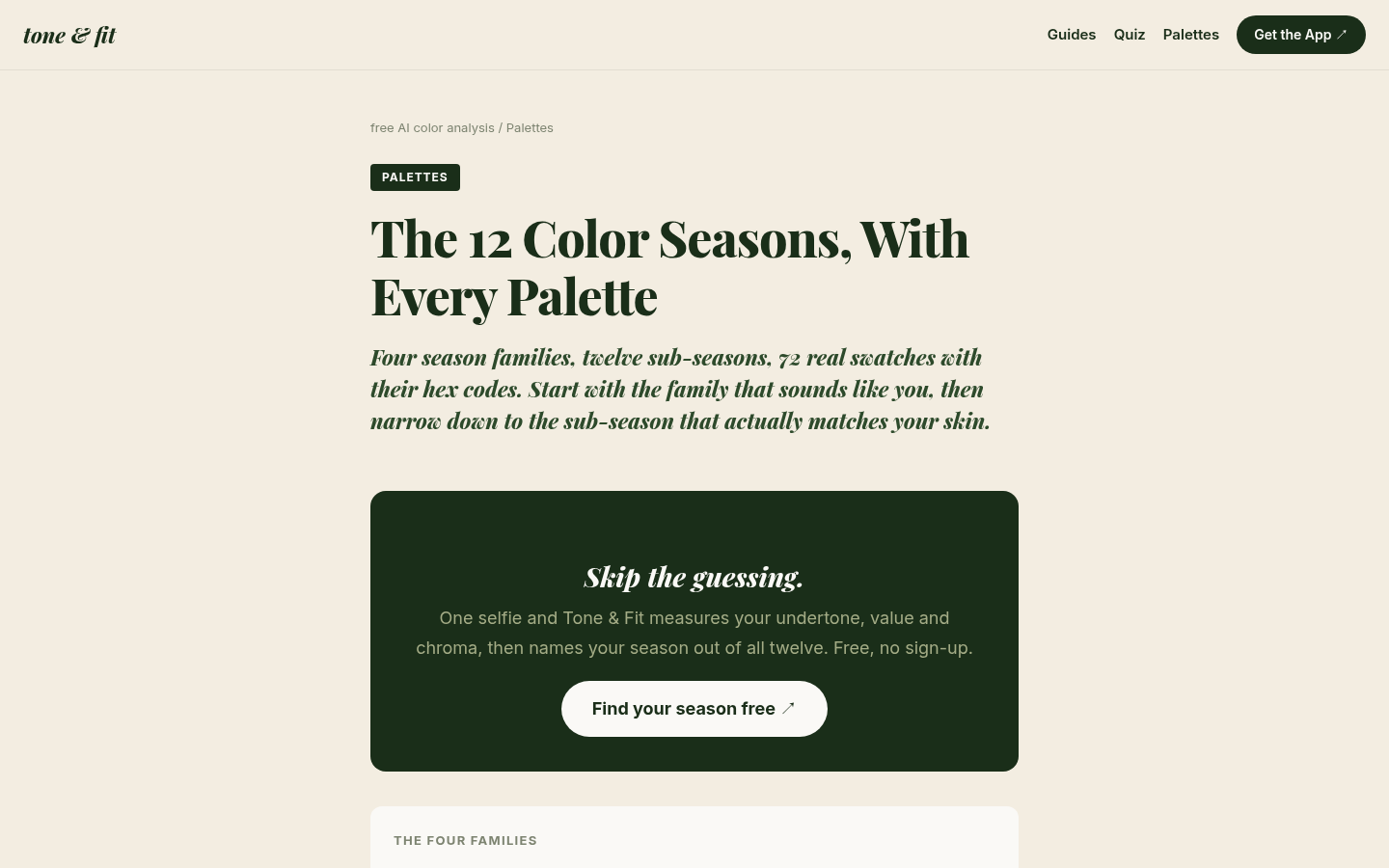
Desktop first-screen of the palettes index page showing season families (Spring, Summer, Autumn, Winter) with hex-coded swatches and sub-season links
Five steps keep the decision from turning into a guess:
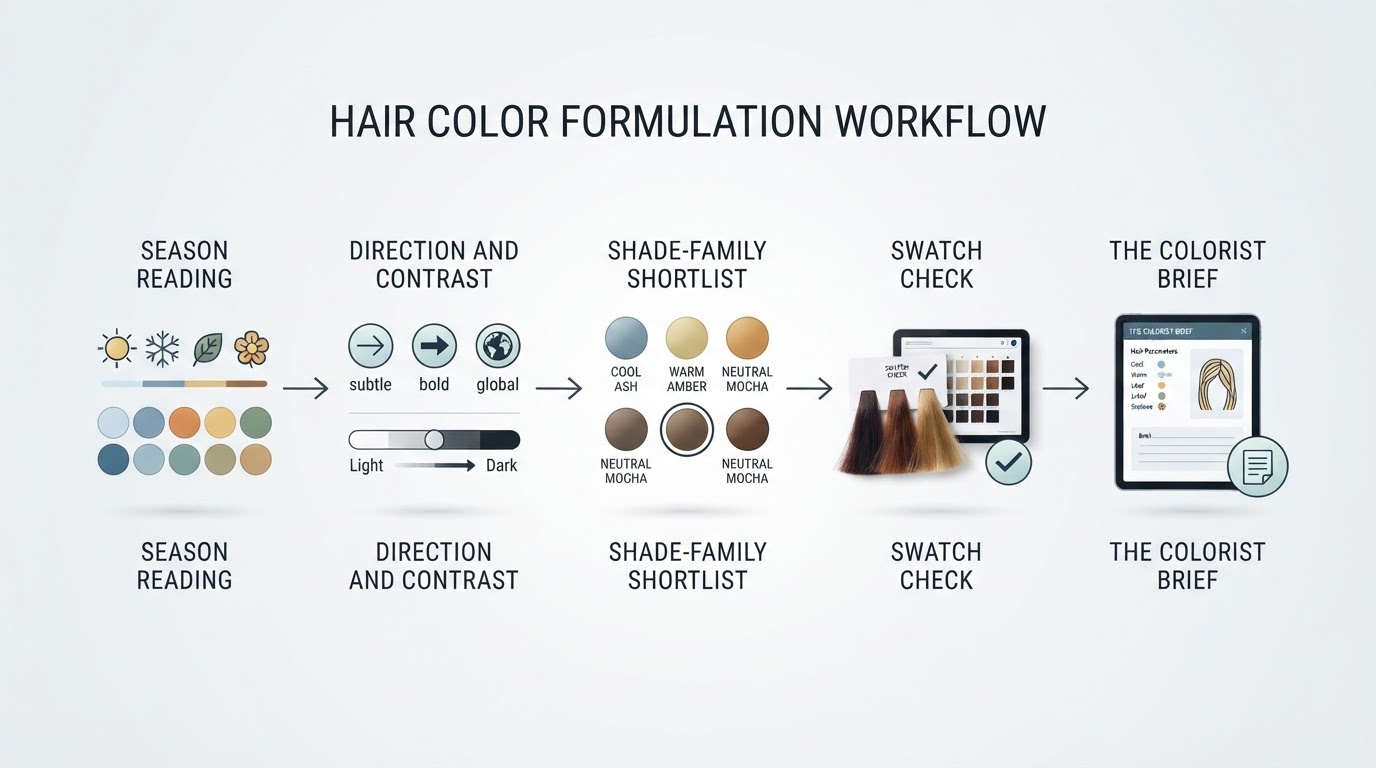
- Get a season reading — a photo-based scan, a consultant session, or both.
- Write down your direction (warm or cool) and your contrast level.
- Shortlist three shade families that fit both.
- Compare real swatches from your season palette against your face in daylight.
- Take the shortlist and the swatches to a colorist, and ask for a strand test before a full application.
Treat the scan as a strong first filter, not a substitute for professional judgment. Lighting, camera color processing, and temporary tones in your hair can all shift a reading, which is exactly why the confidence signal and a re-scan are worth checking before you trust a result enough to book.
What to Tell Your Colorist
A colorist can work with a short brief much faster than a vague request. Use this structure:
- Season and direction. “My reading came back season, so I am looking for warm or cool shades.”
- Depth. Say how far from your natural depth you want to go: a shade or two, or a deliberate transformation.
- Shade family and reference. Name the family — honey blonde, cool brown, copper — and show the swatch you matched.
- Contrast. Explain that you want to keep your natural contrast rather than fight it.
- Maintenance. Ask what the grow-out looks like, how often touch-ups are needed, and what the color does as it fades.
- Testing. Ask for a strand test before a full application, especially for a large depth change.
Two details make the conversation easier. First, tone and depth are separate levers: if you like your depth but not the brass, say so, and the colorist can shift the temperature without lifting you lighter. Second, the same framework works for men's hair and beard color. Lead with direction, depth, and contrast, and keep the shade inside a family that echoes your natural coloring instead of creating a flat block of color.
Common Questions
What hair colors suit warm undertones?
Families such as golden blonde, honey, copper, caramel, chestnut, and warm auburn. If your undertone reads warm, keep the depth close to your natural base and let the gold do the work. Very ashy, blue-based tones tend to read dusty on warm skin.
What hair colors suit cool undertones?
Ash blonde, cool brown, espresso, burgundy, and berry reds. Cool skin usually looks best when the shine comes from depth and tone rather than a golden reflective. If your hair pulls brassy quickly, say so before the appointment; a colorist can adjust the formula for it.
Can I trust a photo-based color analysis for hair color?
Use it as a filter, not a final verdict. A photo-based reading is fast and free, and it gives you a direction and a palette to compare against. It cannot replace an in-person assessment of hair history, porosity, and the exact level your colorist is working from. The practical approach is to treat the season reading as a starting hypothesis, verify it against real swatches, and let a professional confirm the formula.
Should I go lighter or darker?
Let contrast decide before you let the trend decide. High-contrast features carry clear depth changes well; low-contrast features usually look better with tonal, blended shifts. If you are unsure, change tone before you change depth.
How do I know which shade to ask for at the salon?
Bring a swatch, not a memory. Match two or three options from your season palette, check them in daylight, and describe the family plus the direction. Any colorist can convert “cool brown, close to my natural depth” into a formula; “medium brown” gives them much less to work with.
The Short Version
Season first: warm or cool direction, value, and chroma. Then contrast, which tells you how much depth change you can carry. Then a shade family from your season palette, and finally a short brief for your colorist with a strand test before the full application. A free photo-based reading can give you the direction in about half a minute; the salon appointment is where that direction becomes the right shade for you.