How to Build a Capsule Wardrobe Around Your Color Analysis Season Results
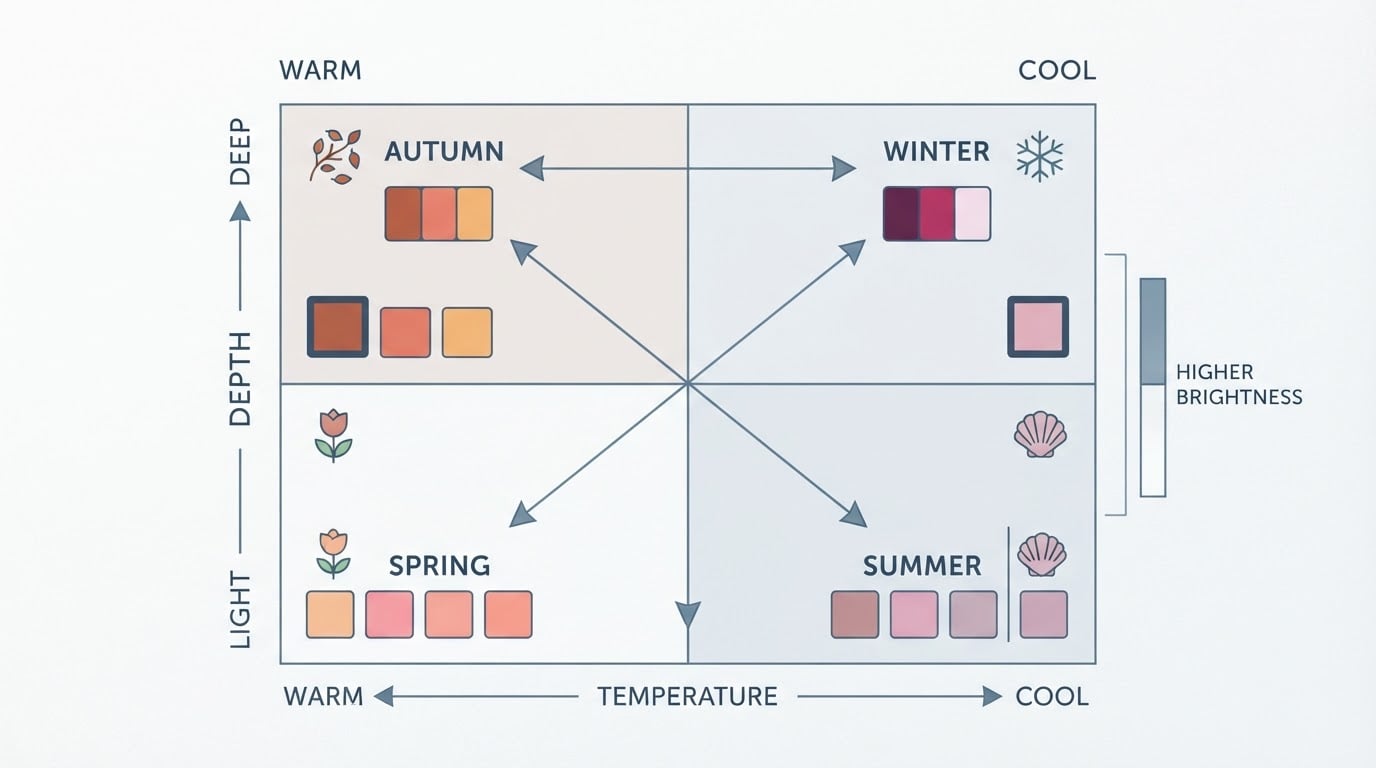
You have a color analysis season result, and you are ready to turn it into fewer, better clothes. This guide is about how to build a capsule wardrobe around your color analysis season results: a finite set of garments with defined jobs that covers your real weeks, not a Pinterest number you are supposed to hit. Palette building is a separate step, so if you have not yet turned your result into a short working list of colors, the Build a Wardrobe Palette From Your Colour Season planner covers that first. Here we assume the palette exists and focus on the architecture around it: auditing what you own, choosing garment roles, keeping a flexible neutral-and-accent structure, and testing the result against your actual life.
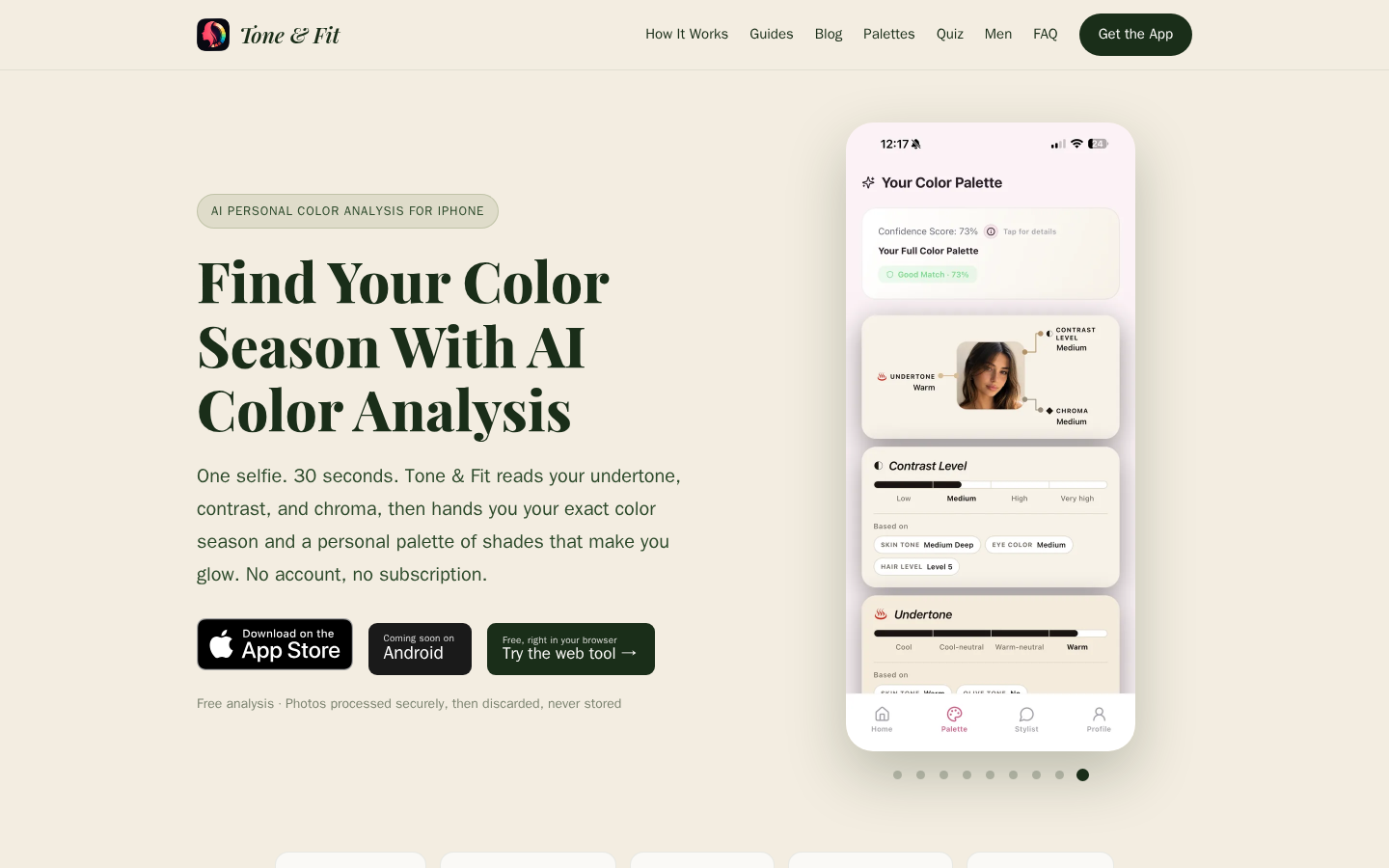
Tone & Fit product interface.
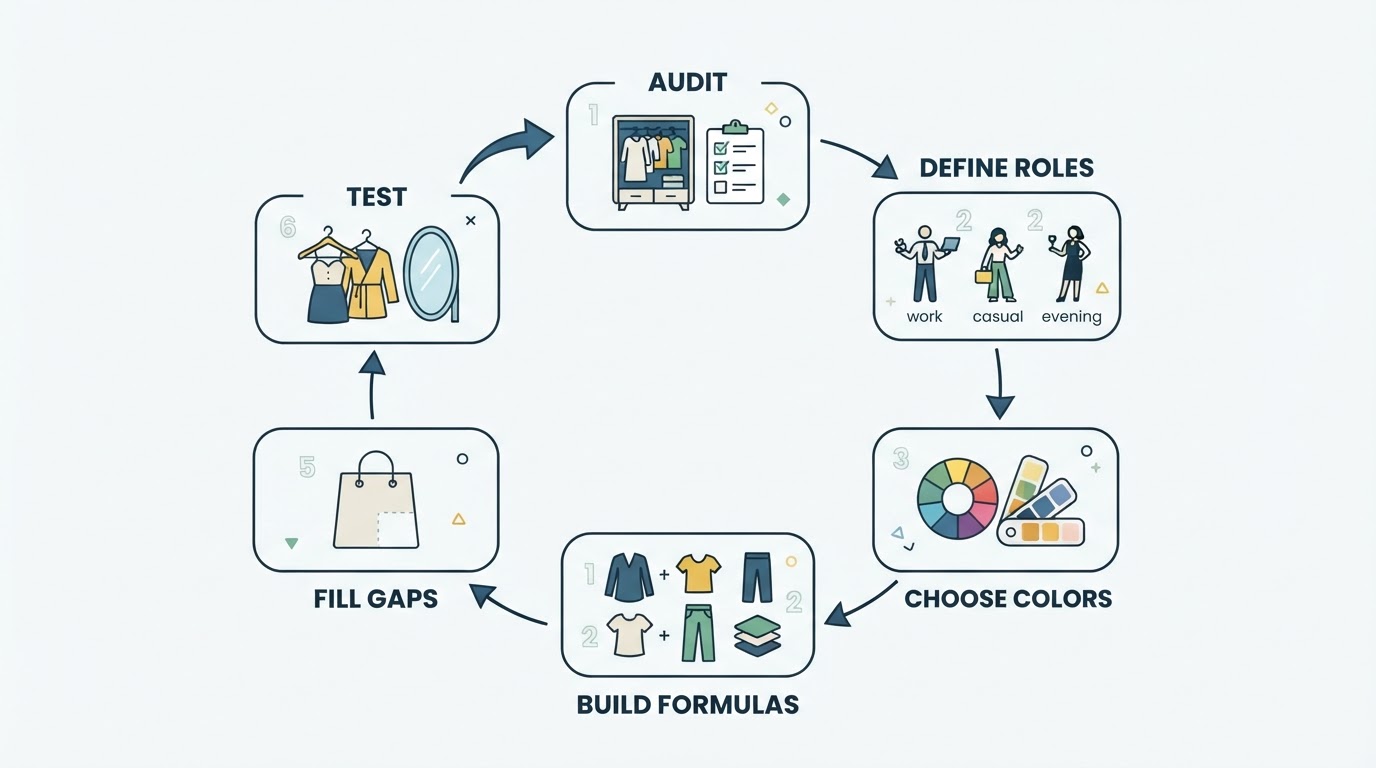
That loop—audit, define roles, choose colors, build formulas, fill gaps, then test—is the whole method. Work through it in order once, then repeat the cheap parts (gap list and test) each season.
1. Start with your colour result, lifestyle and dress-code requirements
Write your season label and your working palette where you can see them: your named result, three or so neutrals, a few signature shades, and one or two accents. Then list what your weeks actually demand. A nurse wears washable layers and sturdy trousers; a remote designer lives in tops that photograph well on camera; a commuter in a four-season city needs one coat that bridges October to April. Note the dress codes you meet (business casual, uniform, creative office, none), the climates you move through, and how your body and mobility needs shape your choices—easy fastenings, forgiving fits, or seated-friendly cuts are all legitimate requirements. This list, not a trend article, decides how many pieces you need and which roles they must play.
2. Audit what you own before choosing capsule pieces
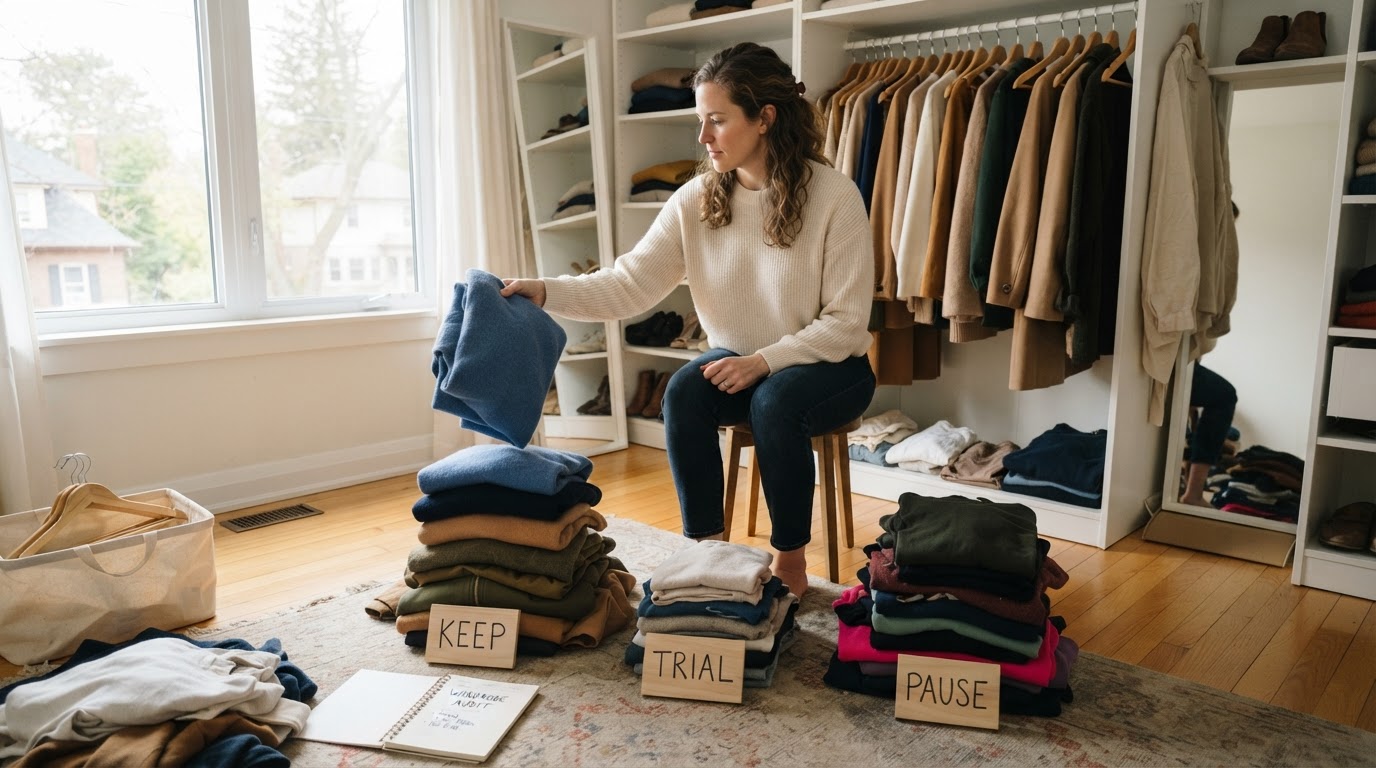
Before you buy anything, sort by what you actually wore in the last two weeks, not by what you think you wear. Pull out the garments you reached for, photograph or list each one, and mark what it paired with. Then scan the rest in daylight and group it into three piles: keep (fits your palette and your life), trial (close, but unproven), and pause (fights your undertone, value, or chroma, or simply never gets worn). Most audits surface the same two findings: the unworn pieces cluster in colors that fight you, and the gaps are almost always neutral—the layer that holds outfits together. Move pause pieces out of prime shelf space so your daily choices default to what works. This audit is inventory, not a verdict on your taste, your body, or your identity.
3. Define garment roles and outfit needs rather than chasing a fixed item count
A capsule works because every piece has a job, not because it reaches a magic number. Define roles by your lifestyle list: base layers and tops, bottoms, one or two dresses or one-piece garments if you wear them, mid layers, outer layers, shoes, and a bag. Count needs by role—"two work tops that survive the week," "one warm layer for the office," "one pair of walking shoes"—and let the total be whatever your life adds up to. A 25-piece wardrobe is right for one person and wrong for another; a parent doing school runs and a consultant doing client meetings will legitimately land on different numbers. If you are building from scratch, treat the roles as your shopping list and fill them one at a time.
4. Choose workable base neutrals, supporting neutrals and accents from the result
Your full palette may hold a dozen or more colors; your capsule needs a compact working subset. Pick two or three base neutrals for large surfaces—trousers, coats, bags—starting with a light, a mid, and a deep version from your season. Add one or two supporting neutrals for pieces that sit near your face, like knits and shirts. Then choose two to four accents for small doses: a scarf, a top, a bag, or a jewelry metal flash. Keep the roles honest: neutrals carry the outfit, accents carry the personality. If your result says Deep Autumn, that might mean espresso and warm ivory bases with rust and forest accents; a Light Summer version might use soft white and dove gray with dusty rose and raspberry. Swap in whatever your own season names.
5. Build around repeatable outfit formulas
Formulas turn a short list of pieces into a long list of outfits without new thinking each morning. Learn three patterns that match your life: a neutral base with a signature top (for most days), a deeper neutral bottom with a lighter top and one accent (for meetings or evenings), and a relaxed formula of light neutral bottom plus two related colors (for weekends). Write each formula as a line—"deep neutral trousers + signature knit + small accent"—and check that every capsule piece appears in at least one formula. If a garment fits no formula, it is a candidate to leave out. These patterns work across genders and dress codes; only the colors and silhouettes change.
6. Use preferred colours near or away from the face strategically
The closer a color sits to your face, the more it should respect your season; the farther away, the more freedom you have. Scarves, collars, and tops carry your most flattering shades. Trousers, skirts, shoes, and bags can stretch further because they read as part of the outfit rather than against your skin—a pair of off-palette trousers in a compatible depth often goes unnoticed once a season-right top anchors the look. This is also the lever that keeps a capsule from feeling monotonous: keep the near-face layer calm and let a favorite accent color appear in shoes or a bag on days you want more energy.
7. Create a gap list and prioritize versatile purchases
Compare your role list with your audit results and write the gaps: the missing light neutral top, the blazer that would complete two formulas, the season-bridge layer. Then rank every gap by versatility before you shop. A piece that pairs with at least three existing items outranks one that pairs with one, whatever the discount says. Fill the highest-ratio gaps first, and when you buy, buy for the role—a solid work top in a signature shade beats a print that matches nothing. If a purchase would not create at least two or three new outfit combinations, it is not filling a gap, it is decorating one.
8. Test the capsule for outfit coverage, layering and seasonal weather
A capsule is a hypothesis until it survives a real week. Test it for two weeks: wear only the capsule, and note the mornings you had to improvise, the outfits you repeated happily, and the days the weather defeated your plan. Check layering by stacking your mid layers under your outer layers to confirm they work together, not just side by side, and check the calendar—if a season bridge month sits between your summer and winter pieces, name the one or two layers that cover it. If you work in shifting temperatures, confirm you can add or remove a layer without losing the outfit. Adjust the capsule based on the evidence, then test again; this is where flexible item counts earn their keep.
9. Adapt the process when favourite clothes fall outside the suggested palette
Your favorite garments do not have to match your season to stay in your life. First, relocate them: an off-palette piece worn away from the face—trousers, shoes, an overshirt worn open—costs far less than the same color at the collar. Second, bridge them: pair a favorite off-palette top with a season-right scarf or collar at the neckline, or layer a season-right piece over it. Third, trial them on a schedule: wear the piece a few times, photograph it in daylight, and decide with evidence rather than guilt. Some colors will earn a place despite the label; others will quietly leave. The palette is a decision filter, not a prison, and your personal preferences are part of the system, not a failure of it.
10. Capsule wardrobe planning checklist
- Season label and working palette written down and visible
- Lifestyle, dress codes, climate, and mobility needs listed first
- Two-week wear audit done; keep, trial, and pause piles sorted
- Roles defined by need, not by a fixed item count
- Two to three base neutrals, one or two supporting neutrals, two to four accents chosen
- Three repeatable outfit formulas written out; every piece fits at least one
- Near-face colors season-right; away-from-face colors used strategically
- Gap list written and ranked by how many existing items each purchase pairs with
- Capsule tested for two weeks, including layering and season-bridge weather
- Off-palette favourites trialed and either placed or released
Run a free Tone & Fit colour analysis if you are starting without a result
If you reached this guide before completing an analysis, the free Tone & Fit color analysis tool measures your undertone, value, and chroma from one photo and returns your closest season with starter colors—no account needed. The Tone & Fit app goes further with your full palette, colors to avoid, and outfit direction built from your own result, so the capsule you plan here starts from colors that are actually yours. Run the analysis first, build your palette, then come back to this architecture.