The Short Version
Five rules carry most of the weight:
- Verify the verdict first. A season label is useful only when you know which sub-season it names and how stable that result is.
- Test before you trust. Hold every new color near your face in daylight before you cut the tag.
- Keep a skip list. Write down the shades that make you look tired, gray, or washed out, and stop buying them.
- Hunt power shades. Three to five colors that reliably earn compliments do more for a wardrobe than a closet full of maybes.
- Buy into a capsule. Every new piece should combine with at least three things you already own.
Start With a Season Verdict You Can Actually Trust
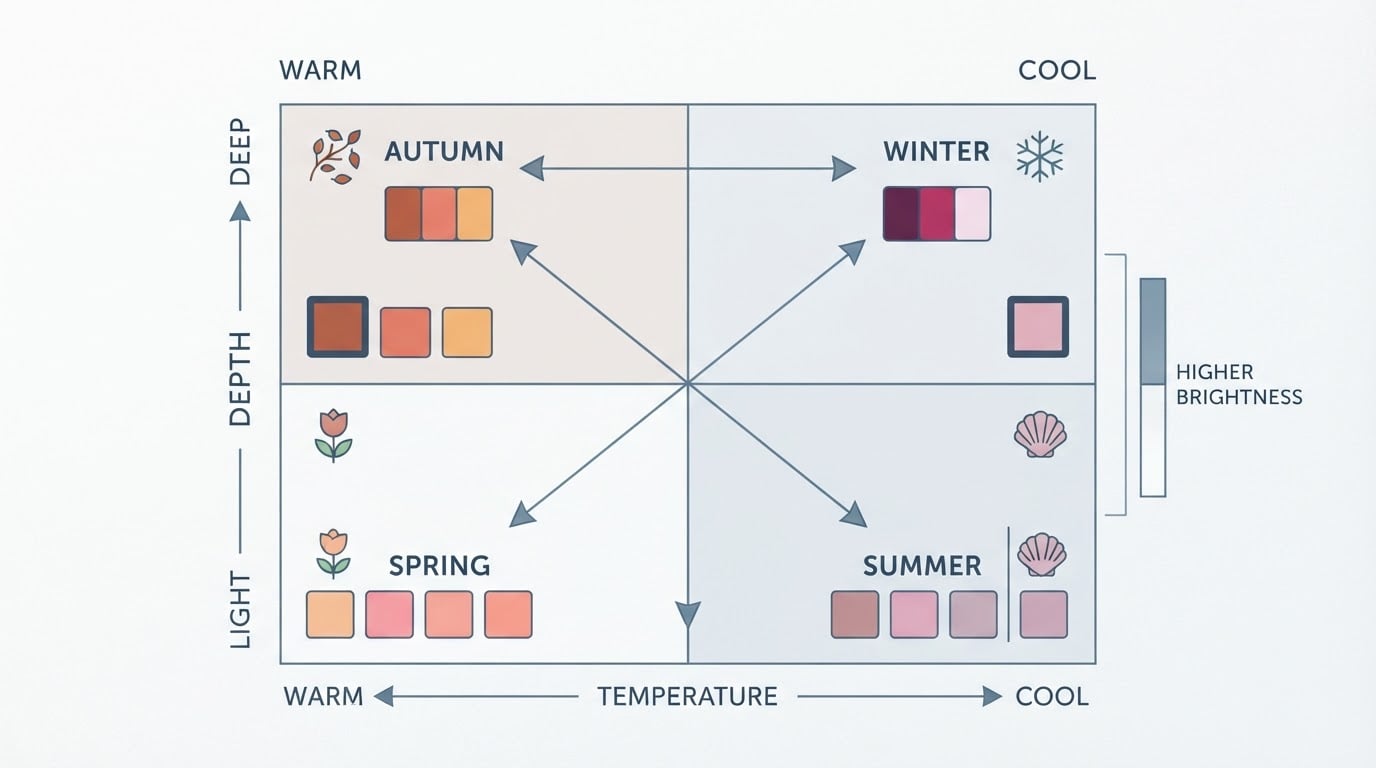
A color season is shorthand for how colors behave next to your skin. In the 12-season system, a result names both a family (Spring, Summer, Autumn, or Winter) and a sub-season, which is why "Autumn" is too broad to shop from while "Soft Autumn" or "Deep Autumn" gives you something to work with. Tone & Fit, for example, publishes a free 12-season palette library with 72 hex-coded swatches, so the label you receive can be checked against real colors instead of a mood board.
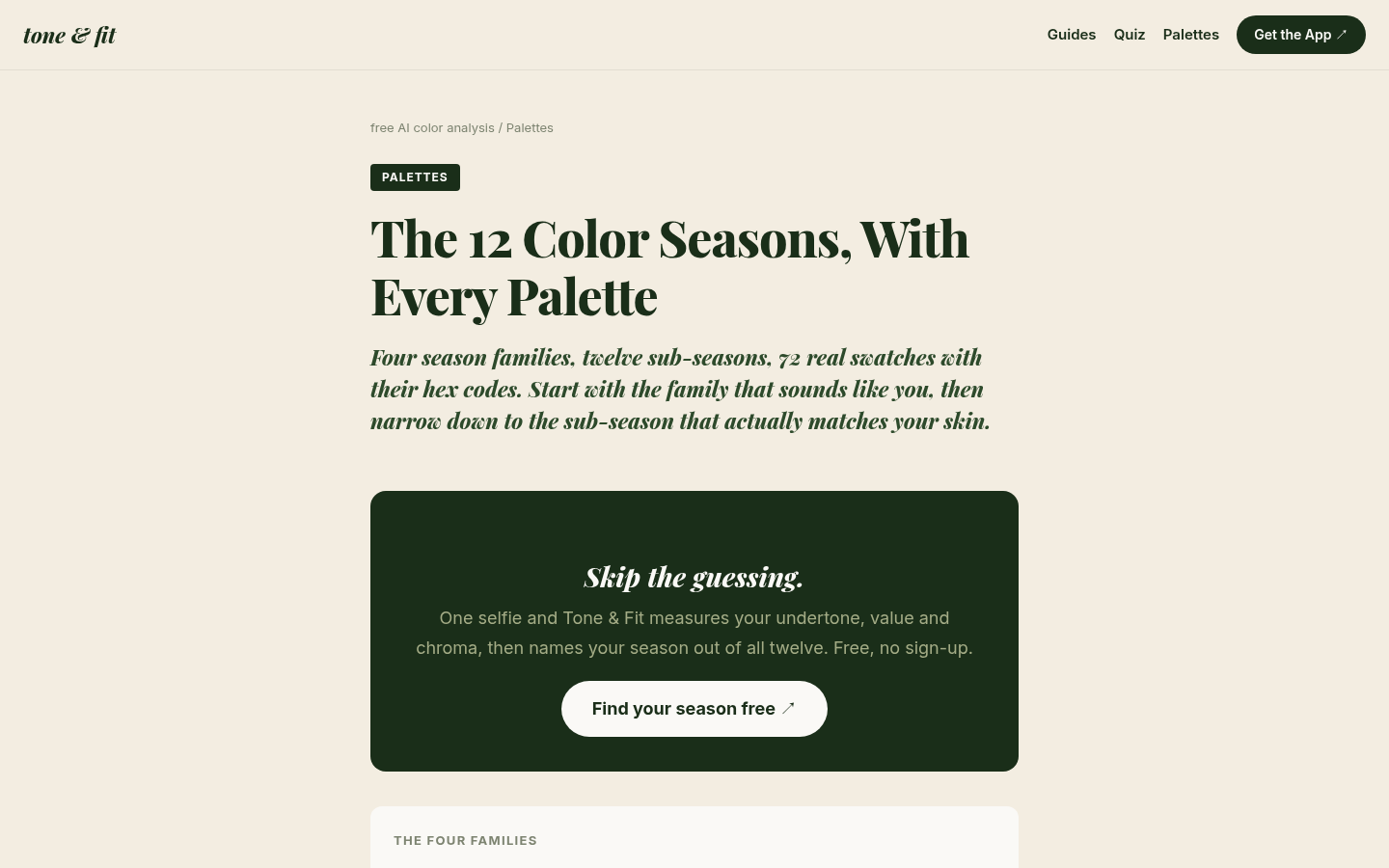
Desktop first-screen of the palettes index page showing season families (Spring, Summer, Autumn, Winter) with hex-coded swatches and sub-season links
What a verdict should tell you
A verdict worth shopping from answers five questions:
- Which family and sub-season you match
- Which colors act as your neutrals
- Which shades are your power colors near the face
- Which shades are skips for collars, scarves, and earrings
- How confident the result is
If a tool gives you a season name and nothing else, you have a label without an instruction manual.
A five-minute sanity check
Before you spend money on the verdict, spend five minutes testing it:
- Use a recent photo taken in indirect daylight, with no makeup, no filter, and your hair pulled back.
- Note the sub-season, then look at the two neighboring sub-seasons.
- Repeat the process on a different day and compare the two results.
- Test the three suggested colors against clothing you already own.
- If the runs disagree, treat the output as a shortlist rather than a decision.
Photo-based results inherit the limits of the photo. Warm indoor bulbs, tinted moisturizer, a strong filter, or a shadow across half your face can push a reading toward the wrong side of warm/cool or light/deep. A result that lands between two sub-seasons is also normal; it usually means your best colors sit near the border, which makes near-face testing more important than the label itself.
Run a Near-Face Color Check Before You Buy
The near-face test is the cheapest quality control in shopping. Stand at a window with daylight coming toward you, hold the fabric or garment just under your chin, and compare it with a color you already know works. Then watch your face rather than the fabric.
- Skip signals: shadows pool under your eyes, your jawline looks gray, your skin takes on a greenish or muddy cast, or you feel an urge to add more makeup.
- Keep signals: your skin looks even, your eyes look brighter, and the color seems to disappear into a good result rather than announce itself.
Compare two similar shades whenever possible. Placing a warm beige next to a cool beige tells you more than looking at either one alone.
Shopping online moves the test earlier. Ask for a fabric swatch when the store offers one, and read the return policy before checkout, because screens shift color with display settings. A "mustard" on your monitor can arrive closer to olive. If you don't have a season result yet, Tone & Fit offers a free browser analyzer that can give you a starting point before you commit to an appointment or a purchase.
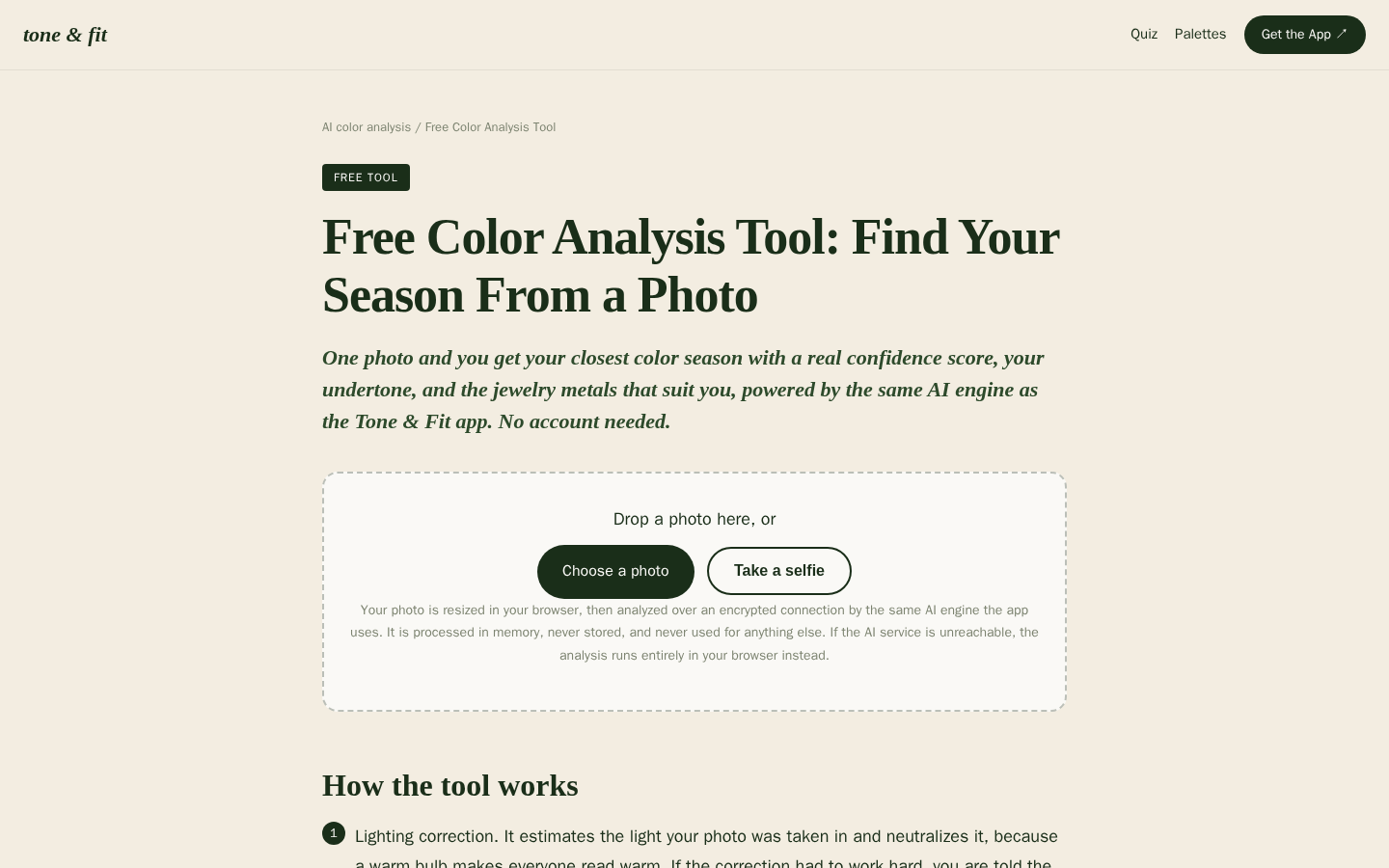
Desktop first-screen of the free web-based color analysis tool with photo upload drop zone, how-it-works steps, and privacy notes
What to Skip and the Power Shades to Hunt
Your skip list is not a list of bad colors. It is a list of colors that do their best work somewhere other than next to your face. A shade that flattens your complexion can still be excellent in a bag, a shoe, or a trouser, where it sits far from the skin.
Build the list from evidence you already have:
- Colors you bought twice and wore once
- Pieces that only worked after you added makeup
- Photos where you look tired and the clothing is the common factor
- Shades that make you say "it's fine" instead of "I like this"
Power shades are the opposite. They are the three to five colors that reliably earn comments, the ones you reach for before an important day. Find them by reviewing the compliments you remember and the photos you actually like, then check how those colors map onto your palette. Keep at least one power shade in a shirt, scarf, or knit, where it sits closest to your face.
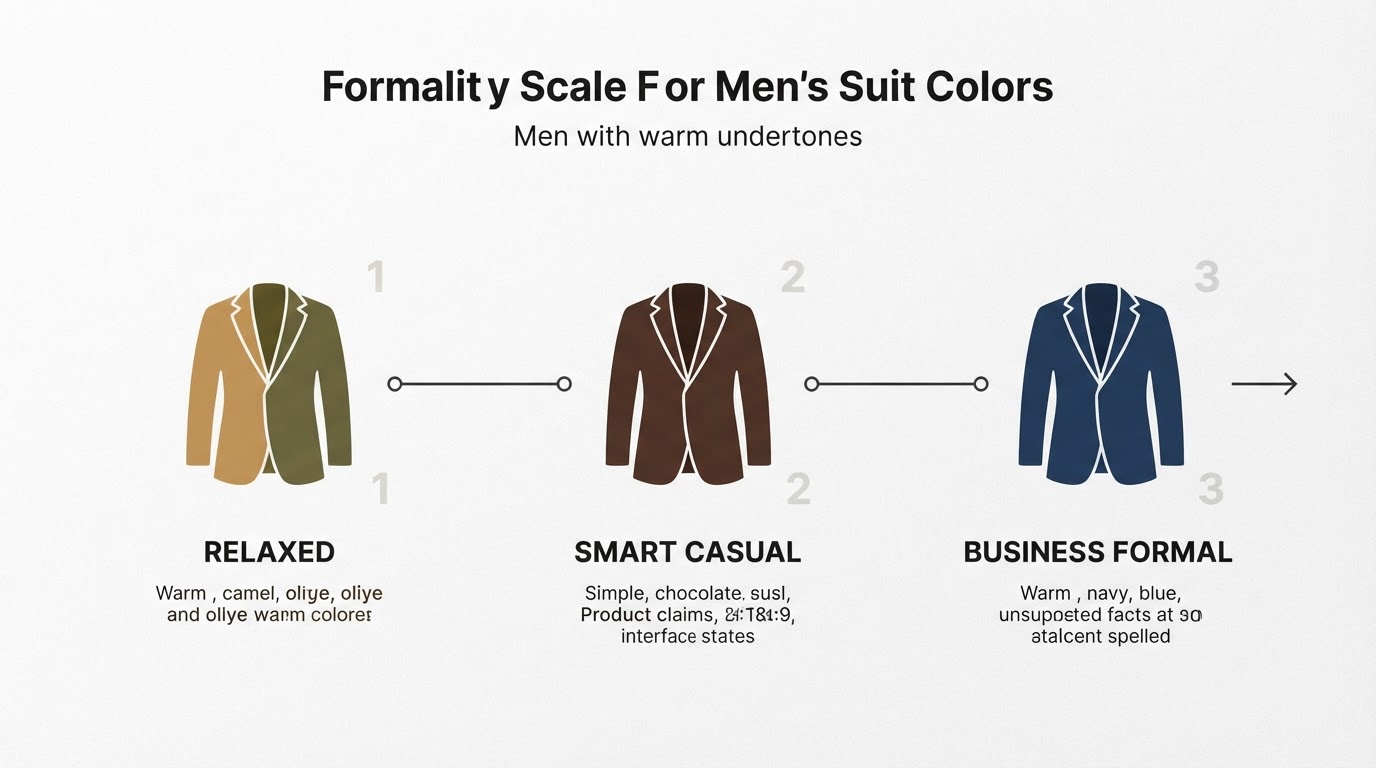
The same logic transfers to menswear. Suits, shirts, ties, denim, and outerwear all sit somewhere on the spectrum from "far from the face" to "right at the collar," and the near-face test ranks them the same way. If you wear a beard, remember that its color adds contrast near your jaw, so a shade that worked before the beard may need retesting.
Build a Cohesive Capsule From Your Swatches
A seasonal capsule follows a simple structure:
- Two base neutrals that cover most of your wardrobe
- Three core colors that work with both neutrals
- Two accents, including at least one power shade
Then apply a three-piece rule to every purchase: a new item has to combine with at least three pieces you already own. If it only works with one outfit, it is a costume, not a wardrobe.
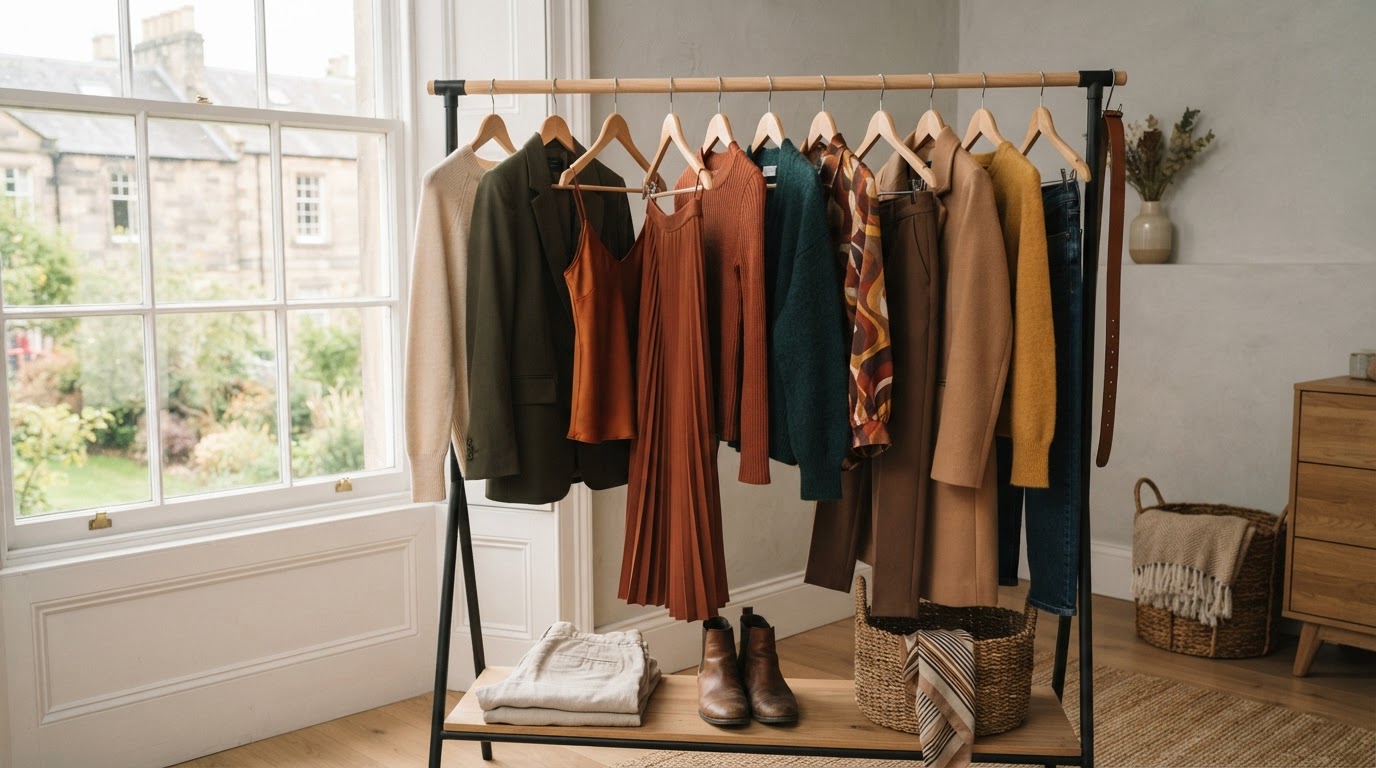
This is where hex-coded swatches earn their keep. Instead of hunting "olive" and hoping, you can compare a garment's actual color against the exact swatch values in your season. The 72-swatch library is free to browse and easy to keep open in a browser tab while you shop, which turns a vague color name into a checkable value.
AI Verdict or In-Person Draping? How to Choose
Both routes answer the same question, but they trade different things:
Criterion | Photo-based verdict | In-person draping |
|---|---|---|
Speed | Minutes | An appointment |
Cost | Often free or low | Commonly $200-$400 |
Repeatability | You can rerun it | One session, notes vary |
Human judgment | Limited to the method | An analyst in the room |
Fabric reality | You bring the fabric | Fabric is the test |
A photo-based verdict is convenient and repeatable, but it is only as good as its input and its method. In-person draping lets a person watch how different fabrics react to your skin in real light, which is hard to reproduce on a phone. If you are rebuilding a whole wardrobe or you have a high-stakes purchase coming, the appointment can be worth it. For everyday shopping, a verdict plus a near-face check covers most decisions.
Your Pre-Purchase Checklist
Run this before you checkout:
- The color sits inside your season or a neighboring sub-season.
- The near-face test passes in daylight.
- It combines with at least three pieces you already own.
- It is not your skip list color wearing a different name.
- You understand the return policy if the screen color misled you.
FAQ
Can I shop clothes by color season without a draping appointment?
Yes. A season verdict plus near-face testing handles most purchases. An appointment makes the most sense when you are building a wardrobe from scratch, when a single expensive purchase has to be right, or when two adjacent sub-seasons keep giving you contradictory answers.
How much should I trust a photo-based season result?
Treat it as a starting point, not a verdict with a guarantee. The quality depends on the lighting, the image, and the method behind the tool. Look for a result that names a specific sub-season and reports how confident it is, then test the suggested colors before you buy anything expensive.
What if I'm between two seasons?
Shop the overlap. Choose the colors that pass the near-face test from both palettes, and treat the ambiguous shades as accents rather than wardrobe foundations. Many people sit between neighboring sub-seasons, especially when contrast changes with hair color or a tan.
Does the 12-season system work for menswear?
It does. The colors near your face matter most, which in menswear means shirts, ties, scarves, and knitwear. Suits and trousers are more forgiving because they sit farther from the face, so start with the pieces at the collar and work outward.
How many colors do I actually need?
Fewer than most wardrobes suggest. Two neutrals, three core colors, and two accents can carry a full season of outfits. Add a color only when it passes the three-piece rule and earns a place next to your power shades.